
This on-demand training dives deep into how to track time and labor costs accurately in Knowify so you can see the true cost of your jobs, not just what hits payroll. We start by breaking down what “labor cost” really means, including labor burden (benefits, taxes, insurance, union dues, and other overhead), and how that translates into a cost-per-hour rate for each employee or resource. From there, we connect the dots between budgeting, scheduling, and actual time entry so you can compare hours and costs against your estimates in real time.
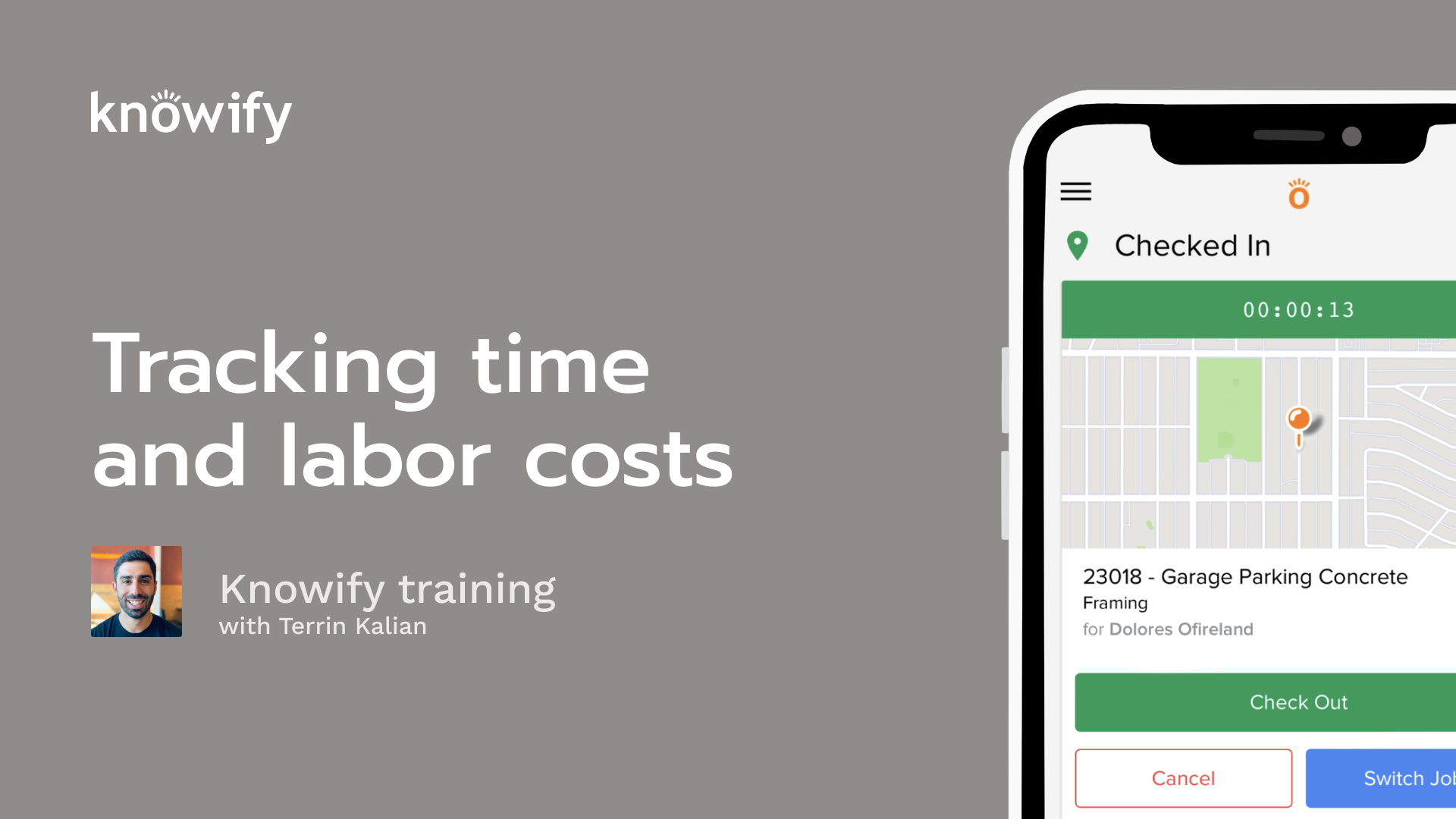
You’ll also see how field and office workflows come together: entering time in the browser, using the foreman view, leveraging the mobile app for check-in/check-out with locations, handling overtime and double time, and tracking internal equipment usage as a job cost. Finally, we walk through payroll and time reports, plus practical workflows for things like PTO, lunch breaks, and phone reminders, so your data is clean, auditable, and ready for both job costing and payroll.
Key learning outcomes
By the end of this session, you’ll know how to:
-
Define labor cost vs. payroll and set up labor burden (benefits, taxes, insurance, union, “other”) to get a true hourly cost in Knowify.
-
Configure employee and equipment rates so that every hour tracked flows correctly into job cost and cost-vs-budget reporting.
-
Understand the difference between estimates, schedules, and actual time, as well as how each one shows up in your project plan.
-
Enter and review time from both the office (timesheets, foreman view) and the field (mobile check-in/check-out), including handling overtime and double time.
-
Track internal equipment hours as a job cost and see them alongside labor in your budgets and reports.
-
Use payroll and time reports (including summarized and detailed views) to support payroll processing, audits, and compliance workflows (e.g., documenting lunches, PTO, and adjustments).