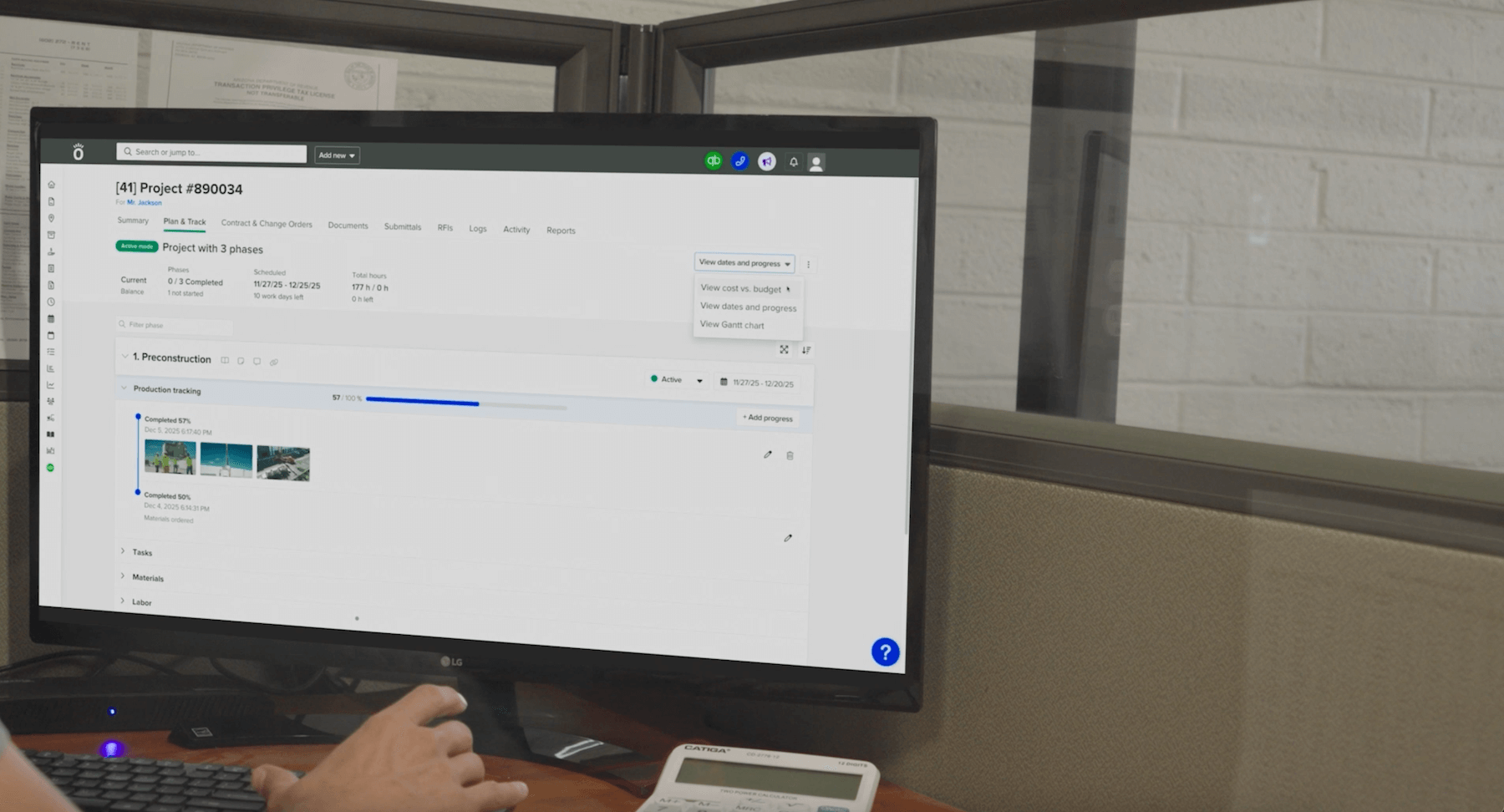
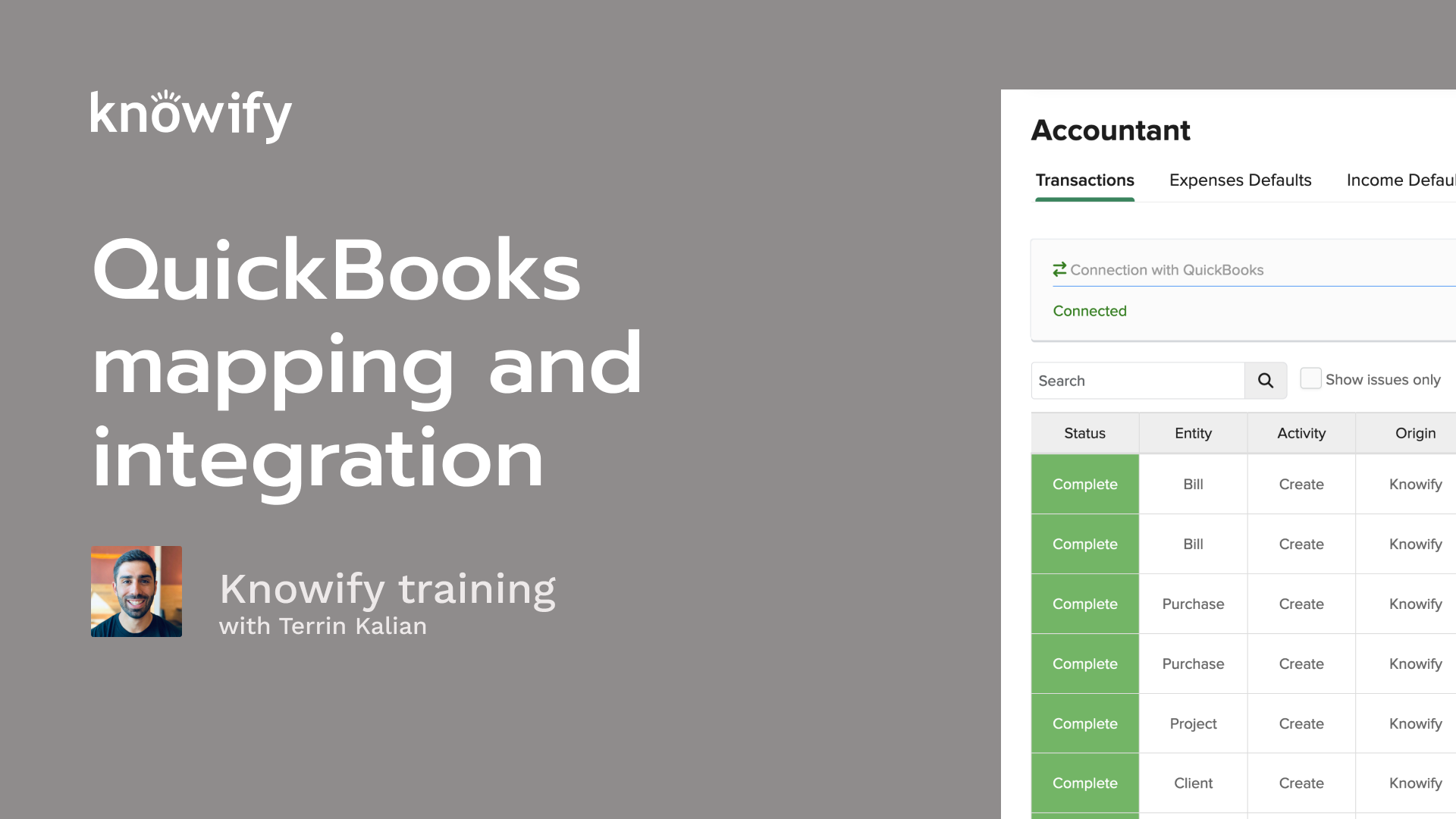
Hello, everyone. Welcome to the CostCoat Show presented by Knowify. This is a podcast where we focus on helping trade contractors run and grow their businesses. Today, I'm excited to be joined by Scott Branchini. He's a construction accounting and construction technology expert, as well as a partner at RedHammer, which is an accounting firm specializing in construction accounting and financial management. Scott's got a ton of experience helping contractors choose the right technology and tools for their workflows and their their businesses, and he's gonna share that with us today. How are doing today, Scott? Doing great, Ryan. Thanks for having me. Awesome. Excited to have you on. So, Scott, to kick things off, for folks who don't know you yet, maybe you could talk a little bit about your background and the kind of kind of work you do and how you kinda got to where you're at today with RedHammer. Yeah. I appreciate that. So Scott Barrancini. I'm a partner at RedHammer. We're an outsourced accounting company that specializes in the construction industry. So our clients are subcontractors, developers, general contractors that typically have revenue in the zero to thirty million dollar mark. So we sit really nicely in the small to medium sized businesses. We perform controller down accounting services. With our team based approach, we come in, we can do things like AP, we can help them with payroll, and then ultimately, because we're job cost experts, so we can help them not only generate, but review their financial statements as well as the work in progress. One of the things that really separates us from our competition is we're not just what we call bookkeepers. We're really highly technical. So in every case that we're bringing new clients on, we're always looking at their system configuration. We're looking at their system integration. We're looking at their data. And like I said, more times than not, we're having to go back, resolve issues, fix things, and bring them up speed before we can actually come on to do the accounting services. My background, crazy enough, is not in the construction accounting side. I started my career at Deloitte back in nineteen ninety nine, and I was doing ERP implementations. I was focused on JD Edwards, focused in the construction space, manufacturing, distribution. I later ended up working for Microsoft and then started my own service integration company. So I have a deep background on software implementations, data cleanup, migrations for billion dollar companies. When I came over to RedHammer, actually started in twenty eleven by one of my ex colleagues from Deloitte, I came over in twenty twenty. Our goal was to take this entity that was serving the Hawaii community and expand it out to the continental United States. And now here we are five years later. We're in twenty different states, and we serve, I think, what, a hundred and thirty different contractors across the nation. That's awesome. That's a very impressive, you know, kind of momentum that you've built over the past, you know, five years or so. A really good transition to what we're gonna focus on today, is that really that construction tech stack, think with this with maybe QuickBooks Online as the centerpiece. You know, it's one of the most popular accounting softwares out there. Nullify, really strong integration with QuickBooks, you know, the vast majority, if not all of our clients are know, using QuickBooks. And we really want to kind of help contractors understand, when is QuickBooks enough? When is it not enough? What are the solutions out there that can help you kind of build off of QuickBooks to build, like, kinda your ideal tech stack? And then Right. Where does maybe some of the newer stuff that Intuit has released, like the Intuit Enterprise Suite IES As folks call it, fit into the equation as well? So maybe we could get started there. When a contractor comes to you, kinda says we've outgrown QuickBooks Online. You know, what do you look at first? Like, how do you how do you kinda handle that question? Because I'm sure you get that a lot. So we'd love to know from your point of view, like, what what's kinda your process when you sorta hear, Well, we we think we think we've outgrown QuickBooks, so we're thinking of moving off of QuickBooks. I think it's usually driven by a couple reasons. One, primarily is they don't know what they don't know. Oftentimes, the system is just not set up configured correctly. So the first thing we do is we ask for the keys to the car. We if we can't look under the hood, we can't provide any sort of a feedback that's suitable. And so oftentimes, and this is like when I say often, I'm sorry. I'm talking about seven, eight times out of ten, you know, the system configuration is not correct. Within five minutes, I can tell you if they are utilizing the functionality, be it the version they're on, be it certain things are turned on or off in the settings. And then within fifteen minutes, I can tell you if they're doing it right. And we have a an assessment that we go through. And ultimately, when you start to get into job costing, companies have to have a certain tolerance of what they're capable of doing. You can get really detailed. And we try to talk to them about what their goals are and what they're trying to achieve. But usually, can come in and say, okay, these are the things that you need to do in order to get what your desired result is. And ultimately, from there, you're able to get x reporting. So if you don't set it up right, you're not gonna be able to maximize the true value of the software. Yeah. So let's dig into that a little bit. So what in your experience are some of those common setup mistakes That you see? Whether we you know, you can focus on job costing or other aspects Right. You know, of the contractor workflow. So First, they have the wrong version. For example, if they're using QuickBooks Plus, right away, they're only gonna be restricted to four reports within the system. None of that are really job costs or you can look at a profitability report by project. But it's not until you get to advance to where you actually expand out. I think it's eight different reports where you just start to look at things like estimate versus actual. You can get a whip. And then of course, you go to IES, I think you get close to twenty different reports. And then you start to get into the real details. But if they're on plus, we know they're not looking at their job costs in the right way. But the minute they're in advance, the number one issue we see flat out is that they their cost code structure. So oftentimes, instead of creating products or items where they can actually have logical cost codes that are relative to their budget lines, what they're doing is they're embedding them into the chart of accounts. Or they're utilizing classes, which is a definite no no for that. And we've run into that more times than not. And the way you have these products is because all of the reporting that is in QuickBooks when it comes to job costing is based on you utilizing those effective products. If you're trying to do an estimate or a budget, you need to put it in with those cost codes. Now at the top level for time contracts, you still need these products, only it's a schedule of value versus likely what the budgetary codes would be. But then you have to also job cost that, you know, at the the project level, and then in addition to those cost codes. That is gonna open up a plethora of functionality and reporting where you're able to actually do estimate to actual comparisons and utilize the system to its fullest. Perfect. That's really helpful, I think, especially understanding the different versions and and what you kinda get from them and and where this potential kinda pitfalls might be. We've talked about the setup issues. Like, what in a contract in your experience, like, in a contractor's day to day is causing them to think that they might need to move off of QuickBooks. I guess I'm trying to understand maybe a little bit more the specific pain points that, you know, in a a contractor's experiencing them might might might make them think QuickBooks is not, you know, enough for them anymore. They need an ERP or something of that sort Yeah. Great question. Different. So I I think what we see oftentimes is they reach a certain point in their business, and we start to see this right around probably the five million dollar mark where it's like, oh, I'm I've I've graduated. I hit five million dollars. I need to get to a more sophisticated platform, and I need to get all this additional job costing. And I hired this brand new project manager, and he used foundation. And foundation is supposed to be amazing and great. And my wife is not doing the books anymore, and it's it's all these sort of combination of excitement and growth and all these additional ideas. And now combine that with the fact that they're not set up correctly and they're not even doing what's necessary to do good job costing within QuickBooks. And so they're oftentimes just chasing a carrot. And what we want to do is we wanna paint the picture of what chasing that carrot really looks like. Sure. I'll tell you right now that the foundations and the sages have better job cost functionality. But the problem with those software applications is you go completely backwards from a technological perspective, and so you lose a ton of efficiency. So where in QuickBooks, you can go in and quickly change things or you could job cost where, hey, I coded this wrong. I can go back and I can recode it. You lose that that that functionality or that ability to do that in some of these other software applications. So oftentimes, these guys are just simply chasing a carrot. And like I said, Sage and Foundation, those guys have a great product when it comes to job costing. More sophisticated things like AI billing, things like commitment control, things like more advanced payroll and job costing within payroll. That's one of the deficiencies right now within QuickBooks is that you can't job cost QuickBooks payroll. And if you go to something like foundation, they have P4C. So you're there's just additional functionality, but that functionality comes with other pains. And so it's okay. I can either pick my poison or we can take QuickBooks, and this is what leads it to the conversation, and we can start to tack that on with third party applications so we can maximize the the flexibility, the accessibility, the usability of QuickBooks, but add a layer of the things that are missing to help satisfy what those goals and needs are. Perfect. Yeah. So that that makes a lot of sense. It's like you get some really strong native functionality in some of these other players, but kind of that foundational not to use the the name. You know, foundation is one of them. But the foundation is maybe it's older. It's not as modern. You can't add new software tools. You can't plug and play with new software tools. Maybe things like accessibility as far as, like, you know, logging in from a web browser, things like that are a little bit more more nuanced or challenging. So that makes a lot of sense. Cool. So with that in mind, what you kinda mentioned you hinted at this. Like, there's you can kinda take QuickBooks and you can add in additional apps or or software service providers to kinda build out that more fully developed tech stack. So, like, what are some of those areas where, one, QuickBooks falls short and you would start to look for other tools to kind of plug plug the gaps, if you will? Sure. I think the first one where we start to see companies really wanting to want something additional is around contract management and AIA billing. Right now, if you're in QuickBooks, you're doing that stuff in spreadsheets. You're doing it some sort of third party. And then what you're doing is you're transposing that into the system. And that's a pretty big deal. It's when you're in a percent complaint environment, you wanna be able to track that stuff. You wanna be able to look at your everything from cost rolled up. And so when you're trying to do that in a in an Excel spreadsheet, now all of a sudden you're having you have two systems where you're trying to converge that data and it's oftentimes just not good. Especially for the project management side. QuickBooks is highly perceived as an accounting system, not a project management system. And when you start to move into, say, some of these other applications like we mentioned before, they're perceived as a joint. And when we start to think about the billing and so forth, it it would be great to have that kind of in one ecosystem and in one environment or at least interconnected. Perfect. You have any well, I'm curious if you have any, like, horror stories or or maybe not horror stories, war stories, I guess, if you will, of situations where you a contractor was experiencing a big problem or was thinking about moving to one of these like a like a larger ERP, and you were able to kinda stop them before they got too far down that road and essentially solve the problem for them. You know, kinda built out built out a tool built out a tool stack for them that kinda kept them on the QBO pathway, if you will. I I don't think we've ever stopped somebody. I think oftentimes when they're going on this path, they've invested in it already, and they already have money, and they're seeing that through. We have had a couple clients recently that are on foundation that are looking to move back over into likely IES. And really what it comes down to is very simple. It's like they say, oh, they say the exact same thing I mentioned earlier is, hey, job costing is great. I can set up my job. I can set up my schedule values. I have my budget. I can create restrictions around it. And that is amazing. I can get great WIP reporting. I can get great job cost reporting. But I have to extract my, you know, bank transactions out of my bank every month and I have to import them in through a CSV. I have to manually create a two hundred line journal entry and I have limited options on how I get that in. I have to enter in each of my credit card transactions, enter in each of my AP transactions, and, oh, yeah, I routed it. The guy rejected it, and now I have to reenter it. It's the pain and the efficiency of the back office that typically will drive them absolutely insane. It's just it's unforgiving. And ultimately, that pays into their inability to be agile. Also, we're in a day of we're in a day and age of technology where, you know, rest restful APIs are a norm. We have AI that has is growing rapidly And companies are asking about that stuff. And so when you're on an old non SaaS platform, people don't get me confused on what a cloud is versus a hosted cloud. A hosted cloud environment is not the cloud. So it's they're basically giving you a version of something that's on a remote desktop. And which is half the reason why they don't have the interconnection to these different software applications and open APIs, and that's restrictive. And I think people are now getting excited about all this new technology and they're being like, nope. We can't do that. And when they say they can't do it, they can't do it. They don't have the platform and the back end in order to do it. And you're not seeing any of these companies really start to pay forward except for Sage. Sage has created Intact, but they've made it so expensive that anybody that's sitting on Sage one hundred and some of the smaller companies at three hundred, it's unattainable without paying significant amount of money. But, yeah, that's where what we see and ultimately my my thought process on us. Cool. No. That's super helpful. So for a contractor that's in maybe that, like, let's say let's say over the five million hump, like, they're in the six to ten million dollar range. What what does, a healthy kind of QuickBooks centered tech stack look for them? Let's say they're a commercial contractor. You know, maybe they're doing mechanical or an electrical Okay. Or an electrician or or something of that nature versus a GC. Great. Great. Yeah. If it's a GC, there are other software applications and third parties that we would recommend that are better aligned to GC. When it comes to the specialty subs, especially even on the service side, that's really where we like to we like to recommend Noify. And the reason why is because we can take the QuickBooks environment, and it doesn't matter if it's QuickBooks, doesn't matter if it's IES. We can then layer on Noify to do it. And we look at it in a combination of things. Number one, job job setup management. Right? We can control the contract at the very get go with the different options that you guys have available. The next layer of it is really around the way to create budgets and then to turn around and from the budgets, can create commitments and we can tie those together. And then we can then from the budget also create the schedule value, which then turns into our AI billing. So where all these things that we really can't do on the Quickbooks side, we can do them on the Noify side. The other thing I love about Noify, and this is a big part of kind of maybe one of the things that QuickBooks is not great at is control. And so we can create restrictions that only allow certain things to be costed based on what the budgetary items are. And so that's something that on the QuickBooks side, hey, if I'm trying to cost something, I have something that's in my bank feed, I see everything. It doesn't cascade based on the project I chose. And so those restrictions are very helpful in maintaining good clean data and so forth. So then from all of this, then we can actually generate drop cost reports. We can generate WIP and do all that within the Noify platform and application. Furthermore, the field service side is great. So if they're, like you said, if they're a mechanical business or a plumbing business and they have a service side to it, utilizing those service orders is a lean approach to being able to job costs, but not have to go into all the intricacies of developing a full job cost platform. One of the things that that we hear all the time that customers really is the time feature. And so everything in one spot to where they can go out, do the work, they can attach expenses, they could do the billing, and everything from a single portal. That's great. That's super helpful. Do you kinda have, like when you when you're bringing on a new client or or maybe an existing client that's looking to kinda revamp their technology stack. Do you have kind of like a a checklist you go through or like a set a set of questions you wanna ask? Like, do you kinda help them understand, you know, what what sort of tools they need to achieve kind of the goals that they they have as a business? We we don't have a checklist. And maybe it's probably because I've been doing this for so long that I am one of those that kind of I work off of the responses that they have. If I were to write up a script and give it to somebody else, sure, they could probably follow that, but they're not gonna be able to do it like I do it. So at the end of the day, our process, when somebody comes to us or we're introduced to somebody, is to talk about their pain points. What are your issues? What are you seeing? And and that could be a lot of things. Right? That could be software. That could be a person a people issue. It could be, hey, we're seeing rapid growth and we need to address this. It could be a variety of different issues. That's why scripting it it might be a little bit difficult. But once we understand what their pain points are, we then can start to turn into what their their to be vision is. And I think oftentimes people get clouded by, hey, this is my problem and I have to just fix this. And I'm trying to find a solution for this. But anytime you're implementing a piece of software, you have to kind of step back for a second and you have to say, does it a, resolve my problem right here? B, how does it work for the rest of my organization and the rest of my company? And how does that how's that applicable to all the other departments and all the all the other areas of the business? And then the next part, which I think is sometimes the most important is what do I need in the future? What do I need three years from now? What do I need five years from now? And is this a good company? Is this a product that's scalable? If I'm going from ten million to twenty million, do I have to change software in a year if I'm on some sort of rapid growth? And I think we have and that's part of what we do is help them kind of build what their pain points are, build what their requirements are, both from a current perspective and a future perspective so that we can start to paint the picture of really what they need. And honestly, one of the biggest mistakes companies make is they think they need it all at once. There can be phased approaches to things. We wanna take things slow and we wanna take them in a very methodical way. I'm a firm believer that anytime we're introducing technology, we have to look at it from a people, process, and technology perspective. And if you only focus on technology and you don't focus on process and change management and and changing the way you do things in order to meet bad practices, along with having the right people in place, you're not gonna be successful. One of the things that we see oftentimes is, hey, the system screwed up. And and then we start to talk to the people within the organization and we slowly realize, hey, you realize that we can go from a to b, but you're gonna have the same problem because this person doesn't know what they're doing and they're not on board and you're gonna have to make a change there as well. That's great. It's a very holistic approach, which I I definitely appreciate. So I have maybe a couple questions related to that. One, let's say a contractor comes up to you comes to you folks and they have a set amount of money, let's say fifty fifty to a hundred grand they're looking to invest in their business to grow over the next couple of years, you know, where where would you see them rather see them put it? Would it be, like, new software, better configuration of their their existing software, or would you rather they focus it more on the processes and the people side of things? I know that's probably a difficult question to answer because it probably depends quite heavily on the business. But maybe in your ideal kind of what I'm trying to get into is, like, sequencing things out. Like, what's what's most important for a growing business that's in that, you know, six million to ten million range? And, like, what's, yeah, what's gonna help them really kinda, like, hit the gas, if you will? Yeah. I think it is a loaded question. I think it depends on what their current situation is and where they see themselves in a very rational where they see themselves. Everybody says they want to double, but we can tell by the books and we can tell by backlog pretty quickly if that's the case. But I think it's setting realistic expectations and understanding going back to what I said before, it's understanding what the current issues are, if there are any, where I wanna be now, where I wanna be to three to five years. It also depends on the complexity of the business. A good example is, we're working with a company here in Phoenix that does flooring. And they have a really complicated business model because they deal with a lot of GSA and government related entities. So taxation is is complex. They also do a bunch of not just construction, but they do a lot of materials. So they have inventory requirements. That is not a good fit for QuickBooks. It's not a good fit for QuickBooks and Nullifier, QuickBooks and Buildertrend or any of those. They need to get onto a more advanced ERP platform because those are things that a NetSuite or an Acumatica can do. And when we start to think about business complexity, when we start to think about even multi location complex models where maybe there's multi layered departments or inventory requirements or workflow requirements is another big one. That is when we wanna step back and say, okay. Now we need to start to think about where you are gonna be in that range. I would also say volume is a big one too. I'll give a good example. We had an electrical contractor years ago that was just rapidly growing. They needed something more sophisticated. They needed to really tighten up their integration. They were working primarily with Procore, but it just required a larger platform, a more enterprise level platform in order to handle the growth of their business. And so it makes sense. At the end of the day, we're not in the game of software sales. We wanna make sure that we are helping our clients decide what that best fit is and helping to ensure that it meets current requirements and those future requirements. So it's kinda that's a loaded question, but it is very dependent upon multiple things. And they're in for a lot No. That's great. I think. You just threw out the fifty, seventy thousand dollar mark. If you're looking at that over five years divided by ten, that's not a ton of money. You're spending less than a grand a month on on software. And what let me tell you what I wouldn't tell them to do. I wouldn't tell them to go to any of those middle tier software applications because I think they would be going backwards. I think that I think it's a poor investment. I think they're gonna be spending money upfront to get them onboarded. I think then ultimately, they're gonna be unhappy within the next couple of years because as I said, we're in a we're in an exponential technology growth area right now. And if you're not aligning yourself with software that is taking that same path, it's only going to get worse. I would tell them to be patient. I would tell them to let's utilize a baseline of QuickBooks. Let's utilize third party applications, whether it be NoFi or Procore or Buildertrend or any of these that are out there adaptive. And let's start to build a business around these things for you guys. You take the plank and start to spend hundreds of thousand dollars on NetSuite or Intact or any one of those. Cool. No. That's super helpful. And apologies for the the the question with many, many different Oh, no. Different ways to answer it. You touched on something there that I I think it would be good to dig into a little bit. We we've talked around not I know around it. Well, you mentioned some of this stuff, but if you could maybe just kinda break down, like, the trade offs between QuickBooks, those middle tier platforms that you mentioned, and then the full scale, you know, cloud ERPs. Like, yeah, that would be, I think, really helpful at illuminating your audience. Yeah. Yeah. It can be kinda hard to suss out. Yeah. Yeah. I'm gonna I'm gonna I'm gonna kind of show you this and they are explaining this in a very simplistic way. Okay? I'm gonna talk about it in two tiers. I'm gonna talk about it from a functionality perspective. I'm gonna talk about it from a technology perspective. So let's talk about it from a functionality perspective. If we look at three tiers, let's just say we have QuickBooks here and that could be any of them. Right? QuickBooks, IES is a little bit more sophisticated. Corporal Sestop are a little bit more sophisticated than online. That's tier one. Tier two would be foundation, Sage one hundred, Sage three hundred, viewpoint spectrum. You could probably even put Vista in there as the top end, CMIC top end. Then let's go to the next one. In fact, would say CMIC is probably on the top tier. You have NetSuite, Acumatica. So if we talk about it from a functionality perspective, you have low functionality or mid functionality on the QuickBook side. You can do job costing, but it's not overly what I'll call restrictive in the sense that it keeps people to do good behavior. Right? You can do things in a lot of different ways. The minute you move up into that middle tier, you're gonna get the best job cost functionality of all. That is gonna be the highest they have been in the business for years, decades. And they have built entire systems around different types of contractors, different ways that people do things, and they really hit the ball out of the park when it comes to that level. Then we start to get into the NEST suites and NNTACs, And those are above average or medium high. They're not as good as the middle, but they are improving. And even Netsweets isn't great on on job costing. You have to add on another third party in order to really maximize that as well. So that's functionality. So you have this kind of bell curve. Right? Now, let's look at the technology side. So the technology side, you have QuickBooks. And QuickBooks is highly technological. It has tons of APIs, tons of third party. In fact, it probably has the largest marketplace out there of any of the different software. They're very open about the RESTful APIs. They publish documentation. It's all public. You can test it. You can and it's amazing. You can get stuff on Zapier. It's pretty awesome. Go to the middle tier, And now it just dives down. You know, you're stuck in these environments that are remote desktop, that are client server. Either they don't have APIs or they're heavily restricted. And you're having to use things like ODBC or so processes and those require maintenance and management. And they're just they're not SaaS systems and they're not gonna change. None of these are ever going to be what they're what move into any sort of new platform. Okay? And and so that's where you lose things like the bank feeds and these systems are highly restrictive. And so you're you're having to back transaction all the way out to recode and because in job costing, you really don't wanna journalize your your way through transactions. Okay? Now you get to the top tier. Highly technical again. So you get into the NetSuite and Acumatica, good marketplace, good APIs, and maybe not as much stuff that's off the shelf. If you have a development team and you have people behind you, you can do anything you want. Okay? So now you have a reverse bell curve. So it does this. Okay? And so when we start to look now at the total cost of ownership, you're gonna start to see that grow across both of them. And from a platform of if we start to look at that first tier, now if I take a QuickBooks that is medium job costing functionality. And now, for example, I add on one of those third parties, one being Noify. Now all of a sudden, I've increased the functionality of that by a great percentage, which is likely at the tier the of the third one. Maybe not as high as that that second tier where there it's just they've been doing it for decades, but it gets you much, much closer and it gets you there at a much, much less expensive rate. So if I have to continue to go like into the Sage three hundreds or even the foundations, I'm paying what? Two, three thousand dollars a month for licensing, paying probably ten to twenty thousand dollars to do the implementation. So I've already I've dumped a ton of dollars into that. And and I'm going backwards on the technology perspective. Now we jump to the third tier. We're talking at least a hundred thousand dollars. I've seen contracts up to a quarter million dollars, three hundred thousand dollars to get them implemented. And your licensing is gonna be anywhere between three to three to ten thousand dollars a month. And so that is now a significant jump in cost and you're really not squeezing a ton of more functionality out of the system. So that's where we start to go back to your prior question where it's how do you know? It really depends on complexity. It depends on volume. We have a general contractor that is running QuickBooks in a hundred million dollar company. We have a new client who is gonna be going from desktop over to IES and they're a sixty million dollar specialty sub. And so we know that it works. We know that it works. And if it's done correctly and the system is set up appropriately, we can maximize every single bit of functionality to get to where we need to be. Well, on a much, much lower scale, and you have a lot of flexibility with the technology. That was a great answer. I really I think that really I like the reverse bell curve as well. It's a good visual too to help kinda tie everything together. Where on that spectrum would you put IES? Because it's kinda the new kid on the block. So I think a lot of folks are trying to figure out whether that's the right solution for them and and where that kind of fits into the kind of like ecosystem. So the one thing I love about Intuit right now, and I've and I for somebody who's been in the software business since nineteen ninety nine and have been around the block, I've never seen a company so rapidly invest in the future of a particular platform. And not just that. The not just the platform of IES, but even just the agentic AI and knowing what the future is there. And so what IES, if we go back to the core basics of how IES is different than than QuickBooks, the core is that they've developed a software that allows for multi entity. So you could do it in in desperate top enterprise. But right now, if you're online, I have three or five entities. I essentially have to run them on all different QBO's and I have to run my intercompany all independently. And so if anybody knows how bills with intercompany and having to write journal entries on a single side and make sure it matches on the other, it's not fun. IES really is fantastic when it comes to that multi entity roll ups, consolidations, intercompany transactions, be it you could do to do from all the way up to doing arms linked transactions between invoices and bills. And so that's amazing. And really what they're doing there is they're tapping against that intact in that net suite because those are the things that and that's one of the biggest reasons why we see companies move up into that echelon is they need to manage that multi entity. The other thing they've done is they've created dimensions, which think of a dimensions as an advanced class. And it allows you to essentially look at your business, primarily the P and L in different dimensions. So you could say, hey, I want a location. I wanna look at my service based business particular to plumbing. And all those could be different dimensions for a company right now where we're in the middle of implementing. They have they're a flat wall company excavation. And they have a hundred different assets. We're gonna create a dimensional asset so they can record their repairs and maintenance to a single account, but with that dimension. Dimensions are great. We have to be careful on the job costing side because we don't want to get be in the game of just coding more stuff to code. So we have to be a little bit careful there. But the other side that I'm seeing IES really grow is on the construction management job cost side. There are at least eleven new reports compared to QuickBooks, and they're good reports. Like legitimate reports that people ask for. Things like committed costs and so forth, which they don't directly connect the PO to the budget, but if you have them both set up using the same cost code, you'll get the same effect. And they've got change orders now. They actually introduced budgets, but they're investing. In fact, they've they came out at the Connect conference and announced that they're releasing a construction edition that's coming this February. So I know they're committed to it. I've had several conversations with Intuit. I'm pretty intertwined with with them, and I believe that they've they're paving a good path. That's which brings me to another point is when you start to see companies do that and you see them start to invest in their platform and you see them to start invest in in what technology is doing these days, those are the companies you want to attach your company to. It really shows that they appreciate and they care for what the future looks like and that they're dedicated to it. So there are a lot of customers we have right now that essentially I'm saying, hey, let's hold off for a little bit. Be patient. Let's not go and spend hundreds of thousands of dollars jumping to something that is gonna take you nine months and you may not get all the expected results that you intend out of it. I'm trying to keep everybody in a very positive and and try to pave a picture for what they're gonna get in the future. And focus on all the things that they like. Gosh. There's so many good things about QuickBooks. I think people forget about it and until they're gone. Right? It's, oh, man. Those bank things are nice. I got to see all my bank transactions come in every day, and they were pseudo coded, and it just makes my life a lot easier versus having to go and manually type all that stuff in. That's great. Yeah. I think for your last point is around, like, you know, when you can see the the the path the company is taking and the investment they're making. I I agree. I mean, when you're a business owner and you're choosing a piece of software that's gonna kinda be, like, the central place where you run your business, like, you wanna make the right decision. I can understand the trepidation that some folks might have. But, yeah, when you see someone investing and and putting a ton of ton of effort in you know, into that, it's comforting for lack of a better term that that's the right kind of road to go down. So very helpful. You mentioned and I it was just a quick aside, I think, but, like, some of the things that people love about the nice things about QuickBooks that you might not kinda realize until they're gone, and you mentioned bank feeds. Are there any other kinda, like, little well, maybe maybe not little, but, like, things things of that nature that, know, you don't know what you had until it's not there anymore, basically. Yeah. I actually have a quite a few. I always look at I always I use these words, and I recently spoke at the Intuit conference, and I brought this up. I said, we like the usability, adaptability, flexibility, interruptability. I think those are the four characteristics that QuickBooks Online has that a lot of softwares don't have. So breaking those down, usability, the user interface is easy, it's intuitive, the menu structure's easy, the search function's amazing. That's so there's that aspect of it. The interactability. We talked about that for most of this call. The rest of APIs, the connections, and so forth. Flexibility. The ability to go out and create reports on the fly, be able to extract that data into Excel. But one of my favorite features is spreadsheet sync. I think when you get to QuickBooks advance, you get spreadsheet sync. It is amazing. It is one of my favorite tools. It allows for us to pull data into Excel, make changes, push it back. It allows us to load data really quickly without having to create a bunch of different import files. It alleviates us having to go in and to manually add records or change records or so forth. Certainly, are some restrictions. You can't just mass delete stuff out of the system, but I think that's suitable. That's okay. So love spreadsheet sync. And then just to the going back adaptability is just how I mean, there are a lot of people who know QuickBooks. Go out there and try to find accountants or people that know how to use foundation. So struggle. Or Sage. I think we're dealing with a profession that is aging. More people are going out there or coming in. And frankly, new people that are coming into the workforce don't wanna work in archaic software. It's a it's a turn off. They want to work with the new stuff. They want to work with AI. They want to be in they want to be able to do things quickly and efficiently and and so forth. And I think that combined is very attractive for companies. And I think they forget about those things when they move on to other software applications. That's awesome. I love that. We're getting towards the towards the, I think, the end of the end of the interview. So I wanted to give, two questions. I'll try to end with two questions. One is we've talked a lot about investing in technology. And in my experience with working with business owners, the other side of investing is understanding what the return on that investment Right. You know, is. So how do you help business owners figure out the ROI of their technology investment, or how do you how do you kinda coach them to think about it? We'd love to get your kinda insights there. Because sometimes it can feel like you're you're you're spending a lot of money. Yes. You're getting something you use all the time, but how do you kinda quantify the value at the end of the day? A great question. One of the number one things we used to say when I was at the Deloitte and Microsoft is never ever sell a ERP package off ROI. And the reason why and the reason why we say this is that the realization of that is a long game. It's not a short game. I think there's a misperception and we really talk about this. And that's one of the good things about us. Like I said, I'm not in the game of selling software. I'm in the game of helping companies implement a good solution for their organization. And when you start to go back to what I said before, it has to be people process technology. That is a lot. And so if you're not willing to do all the things that are necessary, your ability to realize any ROI just goes down the drain. There's I can't I got it going back into my days at Deloitte where we've gone to these companies and they're like, oh, yeah. We're gonna bring this new software in and we do things different. So plug our old process into this and and Mary Jane over there is gonna manage this. And the problem were the process of Mary Jane. It had nothing to do with the software. They could have done the same thing if they would have changed over there. And so the thought premise that a technology is gonna just plop in and you're gonna all of a sudden your your profitability is gonna go up and so forth. So to me, the key to implementing new software, I think comes down to assuming that you have all those factors there, is how do I create better data? So accuracy of data. How do I get timely data? And then how do I convert that data into usable metrics that I can react to? And where I sell the business owners or where I talk about the where they can go. I don't like to talk about it in dollars. I'd like to talk about it in in data and visibility and what they can do with that. Because if they have good data and they have and it's accurate and it's timely, they can then react. I can't tell you how many companies we work with that don't run away. It's a tragedy because they have no idea what's going on really. They think they know what's going on, but they really don't have an idea of what's going on with their projects on a month and month basis when it comes to any sort of of gain or fade and where they're at relative to an over under billing. It's not uncommon for them to miss a mark at the end of the year and either a, take a hit on profitability or have to increase their profitability and which ultimately has an impact on their taxes. And so it just goes back to to having a pulse on the basics and then being able to react to those basics organizationally. To me, that is a much better ROI than turning around and telling them that you're gonna spend this ten thousand dollars, you're gonna say fifteen. I won't do it. I love it. And I think it's a lot more maybe easier to wrap your head around versus dollars can be kind of like, you know, amorphous, if you will. Yeah. So, no, that's super helpful. So last question I would say for this interview, we always like to end kind of on, like, a like, a really action oriented note on the Costco show. So if there was a contractor that was looking to make one change or or one positive step, I would say, related to their tech sack, you know, this week, this month, maybe before the end of the year, what would you kinda recommend that they do? And I know there's a lot of routes you could go down there, but maybe there's a general kinda general answer or general piece of guidance, I should say, that you have So I think number one, I always like to tell people to to do the research. I think you have to go out and gosh, we're in a world where there's tons of AI. I would use multiple platforms. I would do the research. I would search. But I think it's really important to look at when you're looking at any sort of technology, I think this is where people get lost, is you can't just look at it from a point of view of what your pain is. You have to look at it from a context of your entire business. And if I were to go in and tell a company, we get this all the time. And I have friends that ask me, hey, I I we're looking at a new technology and I really like this and this. And the first thing I ask them is, do know your what your requirements are? And what do you mean? It's do you know your requirements? Have you written your requirements down? Have you taken the time to go through, work with your organization, work with the different departments, and actually document your requirements on what you must have, what you wanna have, what you think you need to have, what you really don't need? And then also, what does that look like next year? What does that look like three years? That exercise alone and just putting it down on paper and evaluating it and scoring it is probably the best exercise any company or organization can do. Because then what that does is now you can start to align that with what all these different software applications can do. That's gonna help you understand what your functionality gaps are. It's gonna help you understand what your technology gaps are, which is oftentimes ignored. It's gonna help you understand what your reporting gaps are, which is oftentimes ignored, which is, in my opinion, one of the things you typically wanna start with because it can drive configuration and so forth. But if you start to do that, that can help shape ultimately what you need to go down the path. And hey, maybe it isn't staying in QuickBooks. Maybe that exercise helps you figure out that, okay, we need to maybe go to a NetSuite because it has x, y, and z, and that is the best software. The research, document the requirements, then sit down. Don't just talk to one software company, talk to many, and figure out what is the best fit. You'll save yourself so much pain and time by just doing that initial assessment and spending adequate time doing it than just jumping in and wasting a ton of money. I love it. Very practical. Great great time of year as well to kinda reflect on Yeah. You know, on that kind of thing in my opinion. So use some of the client moments of the of the year to or the beginning of the new year depending on when we we publish this episode to to really do that kind of homework and due diligence. So, Scott, so thank you. Appreciate you joining us today. Where can folks learn a little bit more about RedHammer if they're interested in, you know, retaining your services or or or, you know, that kind of thing? Sure. If you go to our website, it's w w w dot RedHammer dot I o. There, we have our service pages. We do a ton of blogging, good blogging. We're not just going out there looking for a bunch of SEO. They're very purposeful. And they could really help people become more informative about the implementation process. I have a whole entire article on this whole software gap. If they're interested in learning more about IES, I've written the most comprehensive article that is on the web related to IES. Everything is in it. It's up to date. It's constantly up to date. And if you can visit it, if you have questions, we also built an IES bot where you can go in and ask questions comparing desktop to to online to IES. And it can guide you down a path depending on the type of contractor or what you're looking for. That's pretty sophisticated. Yeah. And so everything is there. We're on LinkedIn as well. Feel free to connect with me, and we're happy to sit down and go through and do an assessment and help you try to pave the path for the future. I I'll look into Scott's words. The articles that he's written are incredibly, comprehensive and thorough. You know, as someone who doesn't you know, I work for Noify, obviously, but I'm not a construction company owner, and I don't, work with many construction companies to help implement complete tech stacks. It really helped me kinda understand the lay of the land. So we'll we'll link some of those articles in the show notes for this episode. Thanks again, Scott, for for joining us. If you need help managing any of your construction projects or your finances, please visit Knowify at Knowify dot com. We love to help you, and thanks for tuning in. We'll be back soon with another episode.