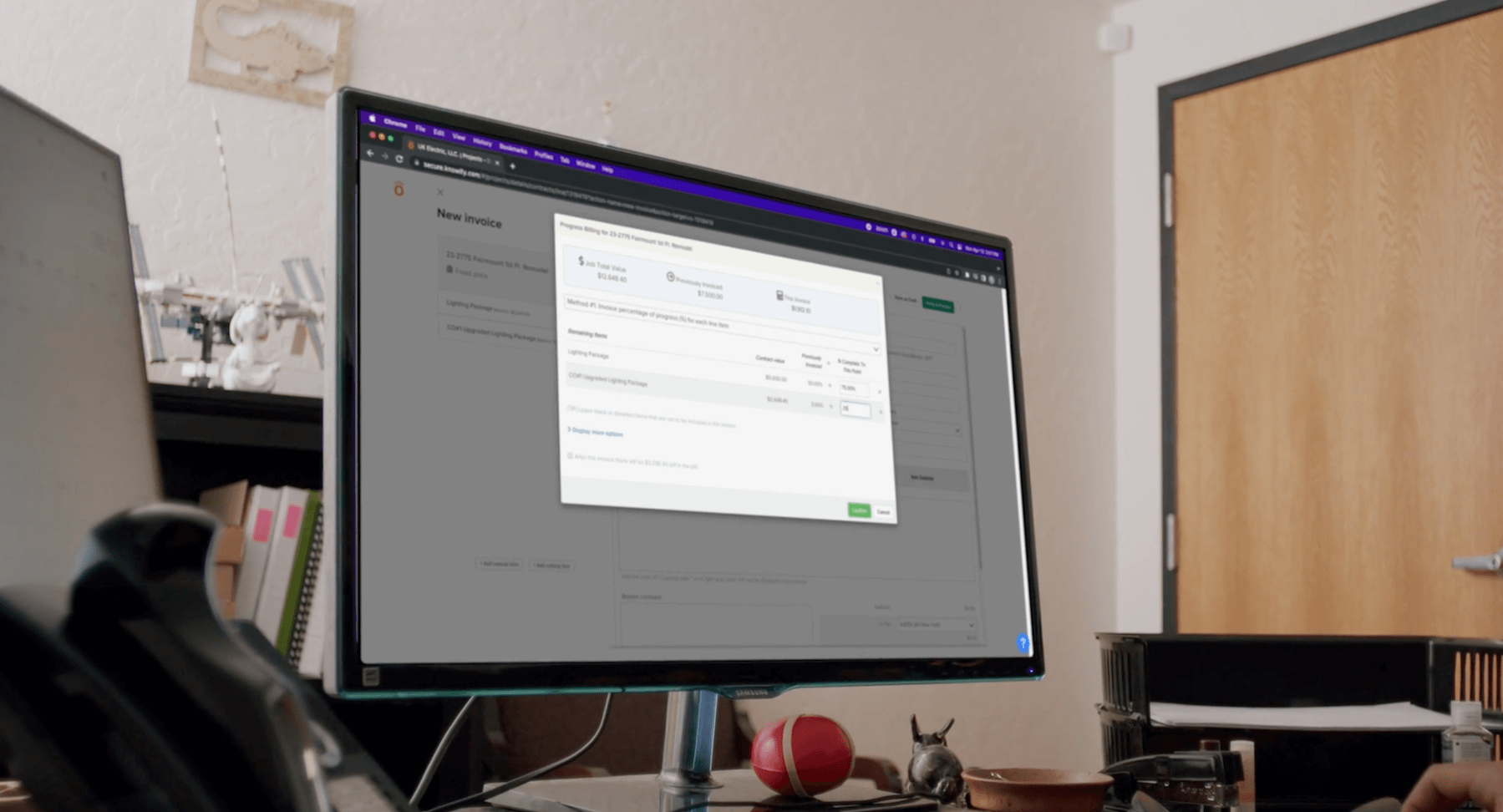
Hello, everyone. Welcome to the Cost Code Show presented by Netlify. This is a podcast where we focus on helping trade contractors, run and grow their businesses. Today, I'm excited to be joined by Steve Cofrin, a construction profitability expert and the founder of Cultivar. He has a ton of experience on the financial side of the industry, and he's going to share it with us in this episode. How are we doing today, Steve? Great. Thanks for having me, Ryan. Of course. My pleasure. So, Steve, for those who aren't familiar with your work, maybe you can talk a bit about your background and and how you got here today. Yeah. So I'll give you the abbreviated version. I started my first company when I was sixteen out of my sister's garage. That's when I got a taste in construction. I was doing landscape installations, grew it into a design build firm doing several million a year. And then after that, I I went back to school, got my degrees in accounting and finance, and I thought, you know what? Maybe I'll try a white collar job. I went to work for Ernst and Young in public accounting, and I realized very quickly that I'm more of a creative. Right? Because doing accounting and doing all this work and just filing in a way in a file cabinet wasn't super fulfilling. So I went into public accounting, and I got a lot of great experience, but I realized there's this massive gap between strategy and finance. So executives would talk about growing the business, expanding into a different geography, whatever it was. And then you had the finance teams building these models and these budgets, but they weren't connecting the dots. So I left, started cultivar, and then that's when I started working with construction companies. Since then, I've been a CFO of million dollar companies, billion dollar companies, and I've advised a lot of other businesses in the process. So that's my background. Excellent. Yeah. You have experience on both sides of the both sides of the coin as they say, which is fantastic. So based on that, maybe you can give us a quick story or a moment, that really changed how you thought about construction finances. Yeah. Yeah. When I was running my landscape business, here I was sixteen years old, like I said, starting my in starting out of my sister's garage. And as the business grew, here I I grew into it doing several million dollars a year, and I was in my early twenties. I had no financial background. Like, from an operational side, I knew how to design and build projects, but I didn't know how to read an income statement. So I could look at revenue. I could look at profit, but everything in between, no clue. And, Ryan, if he said to me, how do you influence gross margin? I just make up some stuff for everybody. Like, I don't know. If you ask me what cash flow was it like? Is that the balance of my bank? And so here I was operating this business just by sheer heroics and grit, and I made a ton of mistakes along the way. And I remember there's one point in the business where we had to make some cuts to the team because I didn't have a really good strategy. I wasn't really watching the numbers, and it's terrible if you ever have to lay somebody off because of your bad leadership decisions. And so I remember that moment after sitting in front of a few people in the boardroom and saying, hey. Look. I have to let you go because I suck as a leader because I don't understand our finances. I admitted to myself that never again would I let a lack of financial literacy ever impact somebody else's life, including my life. That's really admirable. I think when we talk about finances, it can be hard to remember that there's, like, a human side side of the a human side of the numbers or humans on the other side of these decisions. So it's it's, yeah, as I said, admirable that, you were able to take that lesson and and apply it going forward. Jumping off of that, so with cultivar, you work with a lot of as an adviser for a lot of construction companies. What what's, like, one financial mistake you see over and over again when you first start working with these companies? Yeah. Yeah. I think the biggest problem with construction is not that contractors are dumb with their numbers. It's just that construction accounting can be so complicated. If you think about a retail business or a restaurant, you go in, you buy a shirt, I swipe your credit card, give you the shirt, transaction's done. In construction, we accept money upfront for mobilization. We have to estimate, like, cost of completes. You're trying to track all these costs related to a job. So it's almost like a construction business has all these individual businesses within it. Every single project is almost like a business in itself. And the CEO of that business is almost like the construction manager or whoever's running the job. Right? So it gets very complicated early on. And I think a lot of business owners really struggle with revenue recognition. And that's just a fancy word for how do I match my sales and, like, the revenue that I'm earning on these projects with the timing of the cost. And it's because, like I said, we collect money upfront typically for jobs, mobilization, whatever. And then we record it in our systems in, like, QuickBooks or Viewpoint or whatever software you're using, and it records it immediately as revenue. But then you go and do the job, like, the job the next month, and you're billing against that money you already collected on last month. So now there's a timing difference between your revenue and your cost. So if you look at your income statement, it's like schizophrenia. You look at it one month, you're like, oh my gosh. We're making all this money. And it's yeah. Because you invoiced your customers. It recorded as revenue, but you have no cost because that the job hasn't started. It's not revenue. And then you look forward and the job started. Now you're incurring all this cost, material cost, labor cost, sub cost, and you have no no profit, and the income statement looks terrible. So if you're not doing percentage of complete billing or the correct revenue recognition, then, yeah, your financials are a mess. It's so hard to run a business that way. Yeah. When I talk to my family and friends about what I do, obviously, I'm not a construction accountant, but I try to explain to them the complexity of, like, even a basic, like, kitchen remodel type of construction project compared to running, like, a retail business or rest even a restaurant for that matter, which can also be sort of complicated. Mhmm. Their minds are sort of blown by, just all the inputs and outputs and how you can how you need to keep track of all of it. And, yeah, the just the overall administrative burden that kinda comes with running a construction company. Yeah. Completely. So so, I think this leads into kind of the high level topic of this episode, which is knowing your numbers, essentially, how you can turn those numbers into a strategy. So maybe we can talk about what, quote, unquote, knowing your numbers means for a construction business owner from your point of view. Yeah. So for a business owner, you don't have to be a nerd. Like, we're in the screen shade in the back office doing debits and credits and knowing all the guidance. Right? The newest tax code. It's basically it's understanding the story behind the numbers. That's the difference. So if you look at an income statement, balance sheet, statement of cash flows, those three core financial statements, and if you could understand the story behind it, in other words, you look at the income statement and you're like, wow, our gross profits is declining for the last three months. It's been dropping month after month. Then being able to understand what's driving that. Okay. It could be pricing. It could be our volume, or it could be our cost of goods sold, the cost of delivery. And then if you could get into those further, okay, our pricing's okay, we checked our estimating, we're check, we're good. The volume's good, we're growing, cost of delivery. Okay. Materials, alright, we're good with buying from the right suppliers. Our labor woah. We're off on labor. And you get into, like, the job details, and you realize you're bidding a thousand hours, and it's taken the field fifteen hundred hours. That's when you could start looking at the financials and then making at, like, real changes in the field. And And so that's what I mean by understanding the story behind the numbers and how things flow on the financials. Or another case in point, say you go buy a truck or you go buy a skid steer or a trencher, whatever piece of equipment you're using. You may think, okay. I'm gonna go buy this machinery for fifty thousand bucks. It's gonna show up on my income statement. It doesn't show up on your income statement. It doesn't hit profit at all unless you record depreciation. So just knowing those things so you don't trick yourself because if not, you're gonna look at your profit and say, wow, we're great. It's like, actually, you're not great because you haven't collected on this job. You have a ton of money in retention, and you just bought equipment that's not being reflected. So your cash flow poor even though you have profit. Cool. So I wanna circle back again based off of that to something we started talking about earlier on in the conversation, which was how complex construction financials are. How how complex construction projects are. And that's one of the reasons why contractors struggle to get clear on their finances. Is there any other in your other reasons in your experience why contractors might have, you know, issues understanding the financial kind of health of their business? Yeah. Some of it may be this belief that accounting is responsible for the numbers. I was working with a CEO once when I was a CFO of this large GC, and he said to me, you know what, Steve? The dirt is the deal. That's what he used to always say. The dirt is the deal. And what he meant is if you don't get the dirt, the groundwork, the civil, all that stuff you own account for, the dirt that the project's gonna be built on, the building's gonna be built on, then everything else can start to fall apart. Right? And so I was like, okay. And he's so let me let me give you an example. He said, Steve, if I gave you a soils report, and he actually gave me a soils report. He said, look at the soils report. Can you tell me what this report means and how it's gonna impact pre con and everything else with the job. And so I looked at it, and I could read some things on it, but there's some technical information where I was like, I don't really know what that means or what that abbreviation is, whatever. And he said, see, that's how I feel as a CEO. I'm not a soils expert, just like I'm a or he said, I'm not a financial expert rather. I'm not a financial expert. So when I look at a financial statement, it's kinda like you looking at the soils report. And so he's like, that's why I just don't really get into this financial literacy stuff because I hired you to watch the numbers. And I said, okay. I understand where you're going with this, but the problem is if the whole like, if our whole business was dependent on soils reports and getting really good at understanding soils reports, I would go take a class, a master class, or I'd get training. I'd hire the best soil engineer or whoever it is, and I'd have them teach me exactly what was on that report so I could be fluent with reading it. And so I think with leaders, oftentimes, we think, I'm just a construction guy. I'm just a PM. I'm just a super. I'm just a Centimeters, whatever it is. I'm the CEO of the business. I don't need to know these numbers. I have the CFO. I have the accountant, the controller, whoever it is. And I think that's a big mistake because it's the responsibility of everybody in the organization to know how their work and their actions and their behaviors impact the financials of the company. And I and it like I said, you don't have to be a nerd and know all the ins and outs, but you should know if I do this, then it impacts this line on the financials and have that responsibility and accountability. That's great. I think that's actually a that's a really common perception or or point of view. Right? Like, it's the accountant's job. I don't need to worry about that. So for contractors that think that way, what are some tips that you might have or how they can work, you know, more closely with their accountants to to understand, you know, the financials of the company and also maybe lean on them as, like, a strategic resource, which they often can be. Yeah. So I could just share some things that I've done that that have worked pretty well. But as a CFO, these construction companies, we would always do our monthly financial strategy review meetings in addition to our project reviews. So we'd be doing our project reviews, but the the financial strategy review meeting, the FSR, so what I pointed as, that would happen around the same period. And in those meetings, in the FSR, we look at the financials, and then we compare that to the strategy of the business. So we were pursuing two or three initiatives. We look at the financials and say, where do we need to make adjustments? And I think sitting in those meetings and just getting exposure to the financials over and over again is key. So it's kinda like this, Ryan. Recently, I started doing jiu jitsu. And so I'm forty six years old. I'm like the old guy in the class. Here I am the white belt, total rookie, and totally awkward. Right? Awkward with my body, the movements, and it's just, like, terrible. Even though I wrestled back in high school, that was a long time ago. But at least I have a little bit of a foundation, but it's still, like, completely awkward. I know going in day one to jiu jitsu as a white belt, I'm not gonna know what the heck I'm doing. I'm gonna be, like, flailing and doing a bunch of random stuff. And the same thing is true when you're looking at financials. You just look at them, you're like, I don't know what they're talking about. And maybe the first few meetings, you're just, like, trying to follow along, but you're totally lost. There's they're throwing out EBITDA and working capital and CapEx in your head spinning. But it's repeating. It's that repetition. It's showing up to the jiu jitsu class every day for years, and it's that constant exposure to the financials the same way that will allow you to start understanding the story behind the numbers. And I think it's okay to ask questions. Sometimes we feel like as leaders, we have to know everything. I think it's okay to be like, hey. Remind me again. What is gross profit? And what are the three levers of profit of gross profit? I think it's okay to do that. So I I just think, like, getting exposure and seeing things, having that repetition, asking questions, and having these monthly meetings is gonna be super critical. That's awesome tips. I I in my own personal life, like, learning through osmosis, as you would say, is it's been a, like, a a winning tactic, both in my professional and personal career. Or so yeah. Good stuff there. So you kinda hinted at it about the levers of profitability. So this is something that you talk about a lot, and, I think it's really interesting and would deliver a lot of value to our audience. So maybe you can talk about, the four level levers of profitability. You know, what are they, and what, and why does each one of those matter? Yeah. That's great. Okay. So there's yeah. There's four levers of profitability. When I talk about the three levers, there's three levers to impact your gross profit, four levers to impact your operating profit. And operating profit is how much money are you actually making from your core operations. So let's go through those. So number one, you have price. We what and what I mean by price is what you're actually bidding your work at. Right? So that's the first lever. Number two is your volume. How much work are you actually selling and putting in place? Number three is your cost of good sold, cost of revenue. Same thing. And that may include materials. Like, how well are you negotiating with suppliers? It's your labor cost. So how efficient are you with your labor? It's your buyout. If you're buying out and using subs, like, are there things with subs? Are you using the right subs? Are you overpaying on subs? And then it's all the other direct and indirect costs related to putting in place work. So all of those things encompass cost of goods sold, your cost of delivery. And then the last lever is operating expense. So that's your overhead, your general and administrative payroll cost, your sales and marketing costs, occupancy expenses, insurance, office supplies, everything to run the business. Those are the four levers. And when you break it down like that, like going back to not being a nerd, like, those four things, like, Ryan, even if you don't have a a financial background, I could say, hey. These are the four levers. Can you just remember these four? And you can. Right? It's pretty easy. And when you stay focused on those, and then when you look at the income statement, you're like, where are these four levers? Then they start to line up. You're like, ah, okay. So if our operating profit's down, these are the four to look at. If our gross profit's down, these are the three to look at, and then it all starts to make sense. Yeah. I love that. I think each one of those is actually, like, very tangible. So, and I think that having that kinda, like, these four things are the things you gotta remember is, kind of a great, like, first step. So now that we know what those are, what are some tactics for for managing or improving each one of them? And and maybe before you you, we get into that is, like, is that even a good idea? Right? Is it is it good to focus on all four at once, or is one more important than the other? You know, is a targeted approach the better way to go there? No. It's a great question. So I'd say the first step like, the very first thing you should do is if you go to our website, and, Brian, you could you'll probably provide links, but it's cultivar. You you go to our website. We have a spot on there where you can find benchmarks. So we have benchmarks for all different types of trades. So that's what I do first is I'd go to the benchmark page and just see where you're at from an operating profit perspective. So say you're in electrical. Right? And let's just say the benchmark is seven to eight percent. The first thing I do is compare your operating profit percentage, like, as a percentage of your revenue compared to the benchmark. So if you're at four percent, but the benchmark's seven, okay, there's a three percent gap. That's the first thing I do. There's also a calculator there on the tools page. It's called the four lever four profit levers calculator. You can plug in two numbers, your cost of goods sold percentage and your operating expense percentage. Just write off your financials. It'll spit out the four levers, and it'll tell you what a one percent improvement in any of the four levers will have on, like, your profit. So I'll give you that specificity in other words. So let me just give you an example. You're an electrical company. You have cost of goods sold at sixty percent, which gives you a forty percent gross profit. That's your profit before your overhead. And let's say your overhead is thirty five percent. That means your operating profit will be five percent. So it's forty percent gross profit minus thirty five percent in overhead, five percent left over. If you plug that into the calculator, and I did that before this, it'll show you that a one percent improvement in price will have a twenty percent impact on your bottom line. The next lever number two is cost of goods sold. If you can improve labor or materials or your subcontractor spend by one percent, it'll have a twelve percent impact on your bottom line. And then I think volumes number three, that's eight percent, and then overhead is seven. So you could plug these numbers in. You you can know with exactness how it will impact your numbers, which is powerful. Because if I was a leader and I was talking to my estimating team, and I said, okay. Look, Ryan, we have to figure out a way to raise our prices on our bids. And if we could just add ten dollars, one percent to a thousand dollar bid, that's nothing. Right? That's like a rounding error. That'll have a twenty percent improvement on our bottom line. We're not talking about increasing our price pricing by twenty percent to get a twenty percent improvement. We're talking about adding ten bucks to a thousand. So when you could be specific like that, I think you can rally the troops because they're like, okay. Got it. Versus going to them and saying, we need to raise prices. They're like, by how much? You're like, I don't know. Just just charge more. Not super effective. And I'll share a quick story and then I'll be quiet here. But years ago in the landscape industry, there was this consultant and he was going around to different businesses and he's well intended. He's just definitely mis misinformed. So he's going around to these landscape businesses, and his whole mantra was go in there, cut their cost, help them to grow their revenue. And so we're talking about at their cost, operating expense, and volume. So I just told you with that electrical company example, the two lowest levers. So he'd go into the business and he'd be like, alright. What's the biggest cost? Oh, it's labor. Pull me a payroll summary. They pull the payroll summary. Okay. Let's sort it by, like, highest to lowest. K. These three people, let's fire them. They're costing you eight hundred grand a year in salaries and benefits. And so he did it with one company, and they laid off, like, the top, like, five percent, of people. And the company saved several million bucks in payroll. But then, alright, then is now that we laid those people off, we didn't realize that they were the biggest drivers of our backlog, of our sales. Like, they're bringing in all the work. So then sales dropped. Right? And then the people that left went and started their own companies or they joined competitors, and it destroyed the business. And I don't even know if they ever recovered from their they're, like, flying high days. And so I think that's where it could be super dangerous by just looking at an income statement and be like, let's cut our overhead or let's increase volume or maybe it's less increase our price. Like, how do you know that's the right lever to pull into your earlier question? You can do all four at once, but it's super hard to do. I always like to say d o n e, like, I spell out the word done, and I'm like, put the e on it because so many companies are like d o n with their projects. And I'm like, d o n e. Put the e on it, and don't have all these things that are just d o or d o n because then you're not gonna make any progress. I love that. There's, finishing stuff is, yeah, is the key to progress and and the key to success in my opinion. So and that's a really powerful story as well. I think, like, you know, cutting costs often comes up as, like, the most the simplest or most straightforward way to to improve things for a business. No one really, like, quote, unquote likes to raise prices or there's a fear around raising prices, but, sounds like oftentimes that is the most powerful lever that, a business has to pull provided it's done done the right way. So maybe we could talk about that briefly. Because I know for our customers and I think for this industry as a whole, right, pricing is really difficult. We do have all these different inputs. You have a lot of competitors. You know, everyone's kinda bidding for the same jobs and things like that. So how can a contractor be, quote, unquote, smarter about about pricing from your point of view? No. I think I think pricing in if you do the numbers, use the calculator, pricing is gonna be, like, the top lever almost always. And which is so funny because I know contractors and they go back to their suppliers. And it's say they're an irrigation contractor. It's, oh, this four inch pop up here. You're charging us six dollars. And this other supplier over here said they could get it to us for five seventy five. And if you don't lower the price, we're gonna, like, switch vendors. And I'm like, when you do the math, when you, like, actually do the math and you extrapolate it out, it you're talking about a negligent amount. Right? Very immaterial. And when it comes to pricing, I'm like, what? Instead of beating up your supplier, the supplier who's gonna drive thirty miles to your job site one day and drop off pipe when you're, like, in a bind, or instead of beating up this other supplier or skipping out on software or whatever it may be to make your business better, because that's often what we do. I'm not gonna do that software. We're gonna just keep doing it manually. It's like five hundred dollars a month. We can't afford that. Instead of just raising your prices, there's so much upside there. Contractors do a bunch of wacky stuff. And I think it comes from this maybe it's a lack of confidence. Maybe it's like me early on. I look at I used to look at my bids from the perspective of my financial position. So when I left home at sixteen, I had zero dollars. I had no safety net. It's just it's all me. Right? And so when I was first starting out and I have a thousand bucks in my savings account, and I'd go do a bid for somebody's backyard, I'd bid it out and it'd be twelve thousand dollars according to my, you know, rinky dinky spreadsheet. And I'd look at that, and I'm like, dang. Twelve grand. That just seems like so much money for this backyard. And so I'm like, I'm gonna just drop it down to ten. And I drop it to ten, and I'd get the bid. And then I do the work, and guess what? It would still cost the same amount that my spreadsheet said. And I did that for so long. I did that for years, Ryan. I don't know. Like, I'm such a slow learner. And then one day I realized it's about value. It's like communicating the value. And I so I wrote this book called cash flow. How it's right here. And in the book, I drew this this funny lit looking picture here. I'll just show it for the those who are looking at that. But there's this person and they're trying to get to this, like, palm tree, and that's their dream outcome. And along the way, there's gonna be these obstacles. So it's like, what's the probability of your customer, like, having success with you? What's the speed to value formula and calculation there? And then what's the prob like, what's the friction and just the the sacrifice, like, of working with you? So when you think about those three things with value, if I go in and I just and I'm in a low bid situation and I'm just competing on price. Okay. That's just that's a bigger strategy positioning problem. But if I'm communicating those three things and I say, look, like, you wanna have your daughter's wedding in your backyard, right, in the fall? Yeah. And you want it to be a great place for all your friends. Like, they're gonna come over and you want it to be this amazing experience. Your daughter, hopefully, she only gets married once. And you start painting that dream outcome and really selling the dream outcome. You're not talking about, okay. Yeah. We got thirty five trucks in our fleet. We got a trench or ditch which, and we're gonna do this. We're gonna locate your cables, and we're gonna do this and take you to nursery and walk through the process. That's terrible. Don't sell them on that. Sell them the dream outcome. And then you gotta say, hey, this is why you're gonna have high success with us. Because they're worried what's the probability of being successful with you. So it's saying the reason why you're gonna be successful is we have this track record. We've been winning awards for the last thirty years. We're a member of this associate. We carry these best practices and standards of all the work we've done. We've completed over thirty eight million dollars of work or whatever it is. Right? So you wanna give them that confidence that you can deliver. The next thing is the speed to value piece is if I say to you, Hey, Ryan, I can do your project. And I come in and I'm the lowest price. And I'm like, yeah. So I'm I'm five grand lower than everybody else, but I'm so backed up right now. I'll start you in December. And you're like, what? And another contractor comes in and they're seven grand higher, but they could serve me in three weeks, I may value my time. I may value the speed, so I may be willing to pay more. Or just the effort of working with you. If I'm, like, five grand cheaper than you, but we gotta schedule out appointment that's gonna take a week. It's gonna take me three weeks to get back to you on a design. You know, I'm gonna send you a proposal. It's gonna take another week. You're gonna have to print it out, fax it back to me. You're like, I don't even have a fax machine, Steve. And it's just so much friction to work with me. Then you're like, I'm gonna just pay the higher price. So I think when it comes to pricing, it's like when value exceeds price, customers buy. When price exceeds value, customers don't buy because they don't see the value. So that's where you have to be confident and you have to own your pricing. One one other thing, sorry to to rant on this because I'm obviously passionate about this. If I do a bid and let's say I'm selling you a water feature and it's seventy thousand dollars, if I go to you, Ryan, and say, hey. Okay. Thanks for meeting with me with me, Ryan. I'm excited to do this project. Okay. So the bid came in higher than I expected. So there's a lot of ways we can, like, value engineer this. So let me we could do this different you're gonna be like, what? This guy's, like, freaking me out. If I come in there and I say, hey, Ryan. Look. I did this design for the water feature is beautiful. We're gonna do fifty tons of granite boulders. It's gonna cascade down the hill. We got a great filtration system. It's gonna keep this low maintenance. And all this is it came up to it's only seventy grand. And we could start you in three weeks. Which one are you gonna feel more comfortable with? So it's the selling, not just the pricing that makes all the difference. I love that because I don't think a lot of our I don't think a lot of contractors think of themselves as salespeople, but they're that is a huge component. If someone who's bought owns a home and has bought, you know, services and things like that, it's a huge part of huge part of the process. So I think that's those are some great tips. I wanted to, I kinda do a move into a lightning round of a few, hot topics here because we're getting towards the end of our conversation. So, you know, we all know that cash is king and cash flow is a huge topic in in construction financials. So maybe if you could share a few quick tips or or stories around cash flow and helping and and what could help kind of contractors keep get a better handle on their cash flow and and do a better job of managing it so it doesn't become like a hindrance for, you know, where they wanna take their business. Yeah. So if you look at cash flow, and I posted something like this on LinkedIn just the other day about how much does a three million dollar landscape business actually make? And then I showed profit. And then underneath profit, I had two other main things, and then it got down to cash flow. And it's like, we throw out numbers all the time. Oh, yeah. I made three hundred grand last year. My business made a million bucks last year. But after you add back depreciation and amortization, because those are in your profit numbers, I won't get too nerdy with you on that. There's really two things you have to pay attention to, working capital and your capital expenditures. Capital expenditures, that's just how much money goes out the door to buy trucks, trailers, skidsters, tractor, you're building, etcetera, all your assets. So that number doesn't show up in profit. Okay? So that's down below. Then your working capital, the biggest thing is gonna be in your contract receivables, your contract retention, if you have any inventory, if you hold inventory, and then your difference between that and accounts payable. Those are your main things there. And so the biggest thing, like, if you look at those working capital and capital expenditures, number one, with capital expenditures, I would be pursuing projects that required, like, asset light type work. That's what I'd be pursuing. If you're going after work and it's gonna require all this heavy equipment and this and that, then it's gonna be very expensive to scale your business from a cash flow perspective. Also, when it comes to CapEx, you could be smart with CapEx. Like, when I first started out in my landscape business, I'd go buy a truck and I'm like, I'm gonna get the bling bling with leather, like the spinning wheels, the tint of windows, the sound system. I spent, like, eighty thousand dollars on a truck, and that was back in the day. Right? Now trucks are, like, standard is so expensive. But nonetheless, I would overinvest on my CapEx. And then I got smart, and I was like, I'm just gonna buy a utility truck that has, like it has AC. Maybe it has two forty AC, forty miles an hour down the highway, two windows down. Right? But I wanna over invest my CapEx. And then with working capital, that all comes down to the work you pursue and how you structure the terms of the deal. So if you're going after jobs and it's no upfront payments, we're gonna do fifteen percent retainage or whatever it is. Like, you may be in a cash flow squeeze right from the get go. So you have to understand contract terms. You have to set your own terms that are advantageous to your cash position, then you really have to look out for those two things, working capital and CapEx. Awesome. Alright. I got another one for you, which is WIP reports. This is something that's always a hot topic, for our customers, and I know in construction in general. So how do WIP reports relate to cash flow, and and how can a contractor use those, in their day to day to kind of guide their decision making? Yeah. So I was working with a company, and we're helping them put in place a WIP report. And before, they were just invoicing out of the system, and they weren't doing percentage complete. So we put in place a whip and I showed them. I said, okay. You are in an overbilled position right now, like five hundred thousand dollars, which means it's not like you're doing anything illegal. Usually, when you say overbilled, they think of the movie, the firm back in the day with Tom McGuire and or Tom not Tom McGuire. It's Tom. He's in Jerry McGuire. That's where the first is going from. I love that. I Yeah. It's a great movie. I love it. So yeah. Go for it. Yeah. With Tom Cruise with Tom Cruise, and they think of, like, in the firm, like, they're overbilling their clients doing something illegal or shady. And it's, no. It just means you're overbilled. You've invoiced them more than the work you've done, which is fine. Like, it's fine to be in a overbilled position. So I said you're in overbilled position by five hundred grand, which means when you look at your bank account and you have a million bucks in cash, five hundred of that technically isn't yours. It's a liability. Because theoretically, the customer can be like, hey. We're canceling the job. I want my money back. And they're like, but what? That doesn't make sense. He's like, why why do we need to have this whip? You're talking about, like, EBITDA and profit and cash flow. Why do we need to track all this? We have a million bucks in cash. And I'm like, because the cash isn't yours. You haven't earned it yet. So I think once you put in place a whip and you're tracking it on a regular basis, you have to do it once a month, and it's a pain. Like, some systems make it a little bit easier, but you have to go through the details and it takes effort. But without a whip, you're totally guessing on your numbers. You're just totally guessing on your numbers because the whip's gonna tell you what have you actually earned, what are your cost to complete, which is super critical, and it will show you your overbuild and underbuild position and ultimately your cash flow on jobs. And that that's so important. Awesome. So it's yeah. It's basic kinda like a navigation system, you know, for your business, essentially. Yep. Cool. So one more, and that's and it's gonna be on job costing. So job costing is something to plug Knowify, something that we do, very well, but it's not obviously it's obviously, like, not the most, quote, unquote fun part of, you know, running a construction business. So but there's a lot of value in doing it. So maybe you could talk about, you know, from your experience, what kind of value can a contractor get out of job costing? So tracking, you know, project costs on a pretty regular basis, comparing them against their budgeted costs and things like that. I mean, how that can how that can help them, and in what areas of the business it can help them? I would say if you're not if you're not maintaining a whip and if you're not doing job costing, you're gonna be dead. Like, your business maybe you'll survive. Maybe you'll be one of the lucky to survive, but eventually, you're gonna die. Like, you're gonna go out of business because you have to have this iterative process. You have to have bid, build, measure, and adjust as a circular process. So think about it. That's the biggest contention in a construction business. You have the office and you have the field. In the office, the estimating team, they're like, we can't raise our prices. The market's so tight. If I add more hours, we're gonna lose the job. And in the field, they're like, the office is so unrealistic. Precon, they put out these, like, budgets and these production rates. We can't hit them. And so it's this constant fight. Who's right? The officer of the field. That's where you have to have job costing because if you're not doing job costing, you're missing out on that whole measuring step. So you're bidding. Great. Check. You could do that. You're building. K. Good. Hopefully, you can execute. Then you're measuring and you're looking at your job costing report and you're like, wow. Every single job we do, we are under bidding on anchors in Glue, every job by two thousand bucks. So something's up with our our group or calculation, whatever it is in your estimating software. Or it's like, our production rate is a hundred square feet an hour. Like, something's off because, like, in reality, it's sixty. And if you never fix that, if you don't have job costing and you're not reviewing that and you're making adjustments and you're constantly tweaking, you're literally just guessing. And so think about it. When the economy is going really well, you can have that fatness. You can just maybe you win some jobs, you're lucky. But when the economy tightens, and I'm working with a lot of builders right now and, like, subs, plumbing contractor, for example, I just talked to them the other day. And they're like, yeah, builders are coming back to us and, hey, I need seven thousand dollars back, or you're not gonna get this job. And I'm like, if you don't know your numbers, if you can't go back to that builder and say, look, I can come back and I could drop it by three thousand one hundred and thirty eight dollars. And if I drop it anymore, I'm gonna put my company in risk because we're gonna be below our margin, our required margin. If you don't know that stuff, then you're just gonna go back to the builder and be like, I'm desperate. Okay. I'll give you seven thousand back, and then you lose money. So that's where you need to have the job costing, and that's why I love your software, Ryan, because businesses can use this tool to make their companies so much more effective at selling and winning the right type of work. That's awesome. And I love how you fit, job costing into kinda this this kind of, like, flywheel type of process. I think that really hammers hammers at home. Alright. So we're moving into the the last segment of the show, which is kind of our our takeaways and our free resources. Steve has mentioned a bunch of stuff throughout the the episode I'm at. We're at well, we will absolutely include links to all the various tools and and articles he's mentioned. But, before we let you go, what's one step a business owner can take this week to better understand, where their money is actually going? Yeah. One of the first things that you could do, and I'm I'm pretty proud of this with the teams put together, is this cash flow blueprint. It's this blueprint. It has the eight levers of cash flow, has a description, everything. It has a chart that breaks down cash flow into its component parts and all the eight drivers. It has a checklist of five to ten things you could do for each lever in your business, in a construction business. That has, like, a thirty day plan, has all these resources, and it's totally free. So that's that's my gift to you because I hate seeing companies come to me when it's too late, and they're like, we're out of cash. Help us. I'm like, I can't help you. Like, you're done. Like, you're sorry. You're gonna fold here in in a few months. So that cash flow blue blueprint is a super valuable resource along with the other stuff. I there we put all these free tools out there because we just wanna help contractors and be helpful where we can. Awesome. And that's thanks, Steve, for sharing that with the audience. You can find that at cultivar dot com slash cash flow. Again, I'll have a link. We'll have a link for that, in the show notes. And then, Steve, before we sign off, maybe you could tell the audience a bit about cultivar, what you guys do. I think they might be able to guess from the from the episode itself, but, you know, just in case they're interested in in reaching out about your services and things like that. Yeah. So, ultimately, what we do is we provide companies with this financial operating system. And I say an operating system is because you have to have a rolling forecast. You have to understand your cash. You have to have the right KPIs. And when I say the right that tie back to your strategy, you have to have a strategy so you know where you're going, and we provide all this in a system to help companies have more financial clarity, hold their teams more accountable, and to drive better results. And so that's what we offer. We work with construction and service based businesses, and we especially crush it with companies that don't have a CFO that are looking for that type of strategic financial level guidance, and, and we can provide a great solution for them. Awesome, Steve. Thank you so much. I think that's a great note to end on. To everyone who's watching watching or listening, thanks for tuning in. Remember to check the show notes for all the the resources that Steve has mentioned and is sharing with us all. And if you're looking for help managing your projects or finances, check out Knowify at Knowify dot com. We'll be back with another episode of the Cost Codes show soon. Thanks so much.