Knowify AI is here. Join us live at Knowify Next on 10/15 to see it first.
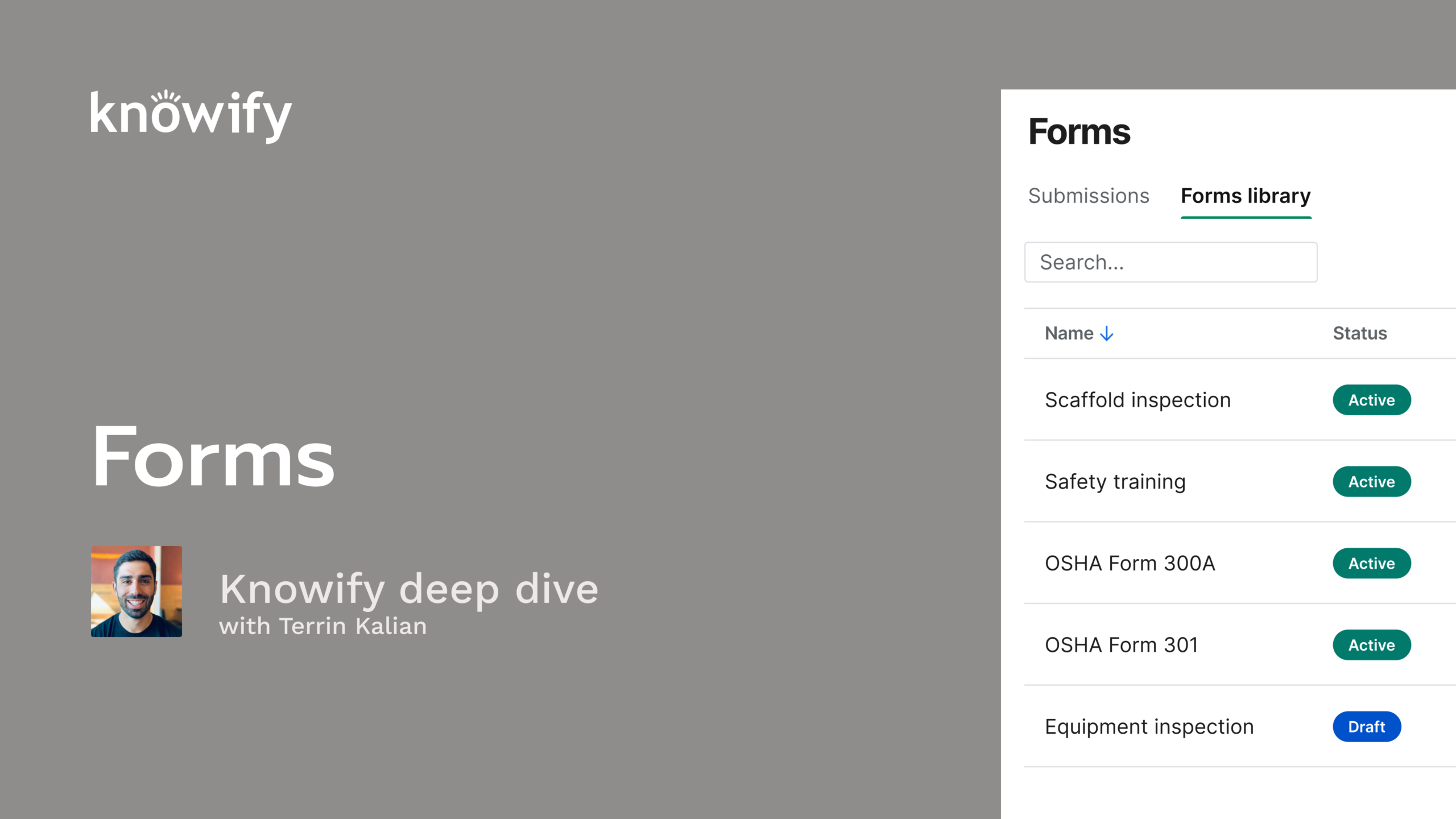
In this episode of The Cost Code Show, Ryan Gilmore sits down with Matt Graves — seasoned construction project manager and creator of Construction Yeti — for a practical conversation on what separates chaotic projects from well-run ones. Drawing on experience from both the subcontractor side and the owner’s rep side, Matt breaks down the project management fundamentals that trade contractors can’t afford to overlook, from building repeatable processes and improving field-to-office communication to capturing change orders before they become lost revenue.
The conversation also digs into one of the biggest challenges facing growing subcontractors: knowing when to rely on process, when to bring in technology, and how to build a business that can scale beyond one owner wearing every hat. Matt shares honest, field-tested advice on job costing, labor tracking, document control, and why the best systems are the ones that actually make life easier for the people doing the work.
Whether you’re a project manager trying to tighten up your workflow, an owner looking to grow your operation, or an accountant supporting construction clients who need better visibility into their jobs, this episode is packed with grounded insights you can put to work right away.
Hello, everyone. Welcome to the Cost Code Show presented by Knowify. This is a podcast where we focus on helping trade contractors run and grow their businesses. Today, I'm excited to welcome on Matt Graves. Matt is a seasoned construction project manager, and he also runs Construction YETI, a website and newsletter dedicated to helping the next generation of construction professionals. Matt has a ton of in the field experience that he's gonna share with us in today's episode. How are we doing today, Matt? What's up, Brian? Thanks for having me, man. I'm good. Of course. Matt, so for folks who don't know you yet, can you give us a quick look at your background and the kind of work you do in the construction world? Yeah. I'll do long story really, really short. So I went to Texas A and M, got a civil engineering degree, decided I did not want to be an engineer. So I got out of school and and found a job at a subcontractor. So I just had a couple stints at different subcontractors, kind of really learning that game. And then I jumped from there and went to the owner's rep side. And so I did I haven't been quite the general contractor, but I've kinda seen them from both directions. Right? Like, practically. And so now I think, like, it's given me a really holistic view of the industry because I always thought, I'm going back to the subcontractor side, I have a lot better grasp of things because now I understand the whys and, you know, why things happen and all that sort of stuff. So I've been on the owner rep now side for about seven years, and then I just realized like, man, there's a lot of stuff that people think they may know or may have misunderstandings and stuff that I thought I knew and had misunderstandings that I'm now kind of got a, you know, a broader worldview, which led me to launching Construction YETI and doing all that and trying to, know, just kinda share insights and share resources and share, like, you know, tips and tricks kind of that I've learned over the last, you know, what, decade and a half of working. Awesome. That's a good lead into my first question. So if you think back to your first few years in the industry, what's something you wish you learned earlier about managing a job or running a crew? You know, there was just so much stuff that I didn't know that I didn't know, which is kinda letting me do the construction yeti stuff. It was because I I you know, when I was, you know, twenty fresh out of school, you know, twenty four, twenty five years old and and thought I was, you know, knew what I was doing. And then at Heinz, like, doing. And, but, you know, I was running crews. We were a federal contractor, subcontractor. We had crews from East Coast to California, and so my phone would start ringing early in the morning as the East Coast guys give it to work and stop ringing late in the evening when the West Coast guys would get offered and think it's just, you know, things that I wish I knew but at the same time is like probably stuff that only comes with experience and kind of those, you know, you know, falling down and scraping your knees type of things, but just, you know, just kind of having patience, right? Like you, everybody gets old, so tense and stuff, but at the end of the day, like I've never been on a project that didn't get finished. There was a lot of screaming, lot of yelling, a lot of things And, you know, I'm just kinda like, take your breath. You know? Alright. Just tackle what's in front of you. Next thing. Next thing. Next thing. And, you know, it's it'll get done. Nice. So Matt is, giving a good segue to the topic of the episode. Right? He's gonna kinda walk us through all of the kind of project management basics that every contractor should nail. So jumping off from that, so what are some of the small mistakes you see contractors make that can actually turn They might seem small at first, but they actually turn into really big problems later on down the road. No. So really talking about subcontractors really, because I mean, haven't been with a general contractor, but you know, the subcontractor side, it's not having project management for the subcontractors. Let's get real nifts right down there. Not having uniform processes that all the subcontractors follow. I've seen it in a couple different companies. I've seen it, you know, even now being on the Hilleridge website, and I you know, you work with the subcontractor on this project, and the same subcontractor on another project, and it's a completely different experience. They do things differently. When you're looking at it like, man, you guys aren't uniform at all. So if one guy gets hit by a bus or whatever, the next guy steps in and it's just there's nowhere to pick up from. And then it's just kinda you know, as a company, you wanna be consistent so you can improve and train your people. And, you know, I I think probably, you know, not having like a project management manual that you train your folks on. You know, sounds like a, you know, just like everybody needs another, you know, rule book. Right? But actually, you know, something that's a living document that you're actually training your people on. Like, here's how we, you know, do our scheduling. Here's how we, you know, our project managers interact with our field crews and, you know, do look aheads and how do we support them and how do, you know, even, you know, things like change order management, right? Because I've seen subcontractors too and that ones that are really good at capturing every little change and ones that are like, they let million dollar change orders go, you know, almost without capturing it. And so there's that fine balance too. Right? Because you don't wanna nickel and dime to your client. But, again, you wanna make sure you you make whole all of Cool. So I like the idea of this kind of project management rule book you mentioned. If you had to list out maybe some of those kind of core PM rules for a subcontractor that doesn't actually have a proper PM department, What would be some ones that kind of come to mind? Maybe like the big bang for your buck ones. I mean, so the ones that really work best are the ones that really kind of hold your hand through the contract, through the construction process. Right? All the way, you know, maybe it doesn't have to do with estimating if your project manager get the, you know, turnover, but it's, you know, what it looks like at turnover day. Right? You won the project. Congratulations. You're the project manager for the the project. And so what does the turnover look like from your estimating department? You know? And then, like, what does that estimate look like? Kind of explaining what all that looks like. And that rolls into your budget, and that rolls into your schedule, and that rolls into, maybe you help the field foreman, field superintendents build out their work plans. Maybe you don't. Maybe you just and just kind of walking through the entire thing. How do you do your buyouts within your when you're buying out your materials and your subcontractors, and then just all the way down the way, all the way to closeouts. Nice. So maybe based on some of that stuff, I wanted to kind of give you maybe like a lightning round of some areas that I know are like really common pain points for our customers, which are all trade contractors and subcontractors, or mostly at least. And field to office communication, you kind of hinted at, is a big one for us. So what are some kind of practical ways that a trade contractor or subcontractor can improve communication between the field and office without necessarily tech can be a solution, but it doesn't really have to be. So maybe process stuff and some tools that might help with that. Ultimately, me included, we're all kind of wowed by the tech and the stuff and communication. How do I, you know, digitize this, digitize that? How can I automate this, automate that? Ultimately, though, you gotta build a relationship with the field. You've gotta get that face to face time. You gotta sit down with them. You gotta go, like, when they have a problem in the field, walk out there and look at it with them. You know, doing month or I'm sorry, weekly look ahead meetings. Right? Sit down with them. Alright. Where are you going? What do you need? What do you need me as a project manager to clear out of your way? Maybe you have an RFI problem. You know, I can't get to this area because there's an RFI holding me up. You know, maybe it's a, you know, a change order. Like, hey, I need to do this but it's been affected by this change order. Can you go get the GC to give me a change order this way? You can get, you know, all I sent her here. And so really it's that that face to face relationship building with them. Kind of for a little example, when I was with one subcontractor, we were on a project and it was, you know, the forty foot Connexes, you know, it was the combo one. So it was like twelve foot office and you know, whatever other side was the good storage of this connex. And there was four of us that had little tiny desks in there. We had a, you know, two superintendents and then a project manager, me and an assistant project manager. And we were tight. Like, I mean tight, if I bumped my chair back, I was gonna hit the guy behind me and we were and, you know, but we'd all go in there and eat lunch together and, know, look at stupid YouTube videos and laugh and stuff. And we were in a job costing meeting, and the president of our company was like, you know, you guys y'all have the tightest project team, you know, between the project management and the field crew that, like, of any of our other stuff. Like, what's your secret? Was like, I don't know. We're just kinda buddies. We look at the, you know, lap stupid shit, and, like, we're looking at this and joking about that, and and we're also kinda sitting in each other's laps all day long to some degree. So I think it's, you know, just kinda being in the mud with them kinda helps build that relationship. Where we had other projects where the project manager, you know, thought he was you know, he's the he's the project manager. Right? And he didn't have, you know, instead of, like, even sharing an office space, like, he had two ConAxes, and he was like or not even ConAxes trailers, actual, you know, full length trailers. And he's like, this is our office trailer. This is our field trailer. And, like, they would be forced to have their weekly meetings. That was, like, the only time they ever talked. And so it's kind of funny. Didn't know it was getting back to the basics of, you know, with all the AI and, you know, different sort of communication channels and everything else. It's just, you know, being able to like, you know, see eye to eye with them and build that personal relationship and just goes one way. No, that's great. That's a great advice. I think no need to be adversaries. You're all on the same. I know if I we have this idea of, like, one team, right, where we try to bring all the different groups together and work on projects across different teams. So I think that that's really good stuff. Another one, you you talked about it a bit was change orders. These seem to be like a pain point across the industry no matter whether you're a GC or a a subcontractor, and it sounds like you have a good amount of experience with them. So we'd love to know, like, what's what's some common mistakes you see with those, and, like, what's a better or ideal process kinda look like, you know, if if that's achievable? Yeah. I I mean, one common mistake is not capturing them. Right? Because, I mean, stuff happens all the time. If you're a subcontractor and you get it for planning and specs, you know, the way I was best trained and was basically, if you're out there, you know, you keep your change order logged, and if anything comes up that could possibly be a change order, just note in your log. This is your internal log. You're not sharing this with the client all the time. But just you start capturing them because, you know, a tiny little thing could very quickly spiral into something much larger. So just capture it so it's let's say it's front of mind. And then when you know? And then if it does start spiraling and you need to have the conversation, you're like, hey. Look. And you've got that story to tell. But then when it goes to change order pricing, you know, I I really see it now. Like, I feel like it was pretty good when I was on the subcontractor side of putting together change orders and and, you know, being able to sell them to the GC who ultimately had to take it and sell it to the, you know, to the owner. But now that I'm on the owner side, you know, I'm reviewing change orders all the time. They come from the GC plus, you know, the subcontractor backup. And the ones that, like, I can basically just check off and and approve are the ones that tell a story. Right? Because, I mean, yeah, there's some subcontractors out there that wanna play the games, and they wanna kinda screw things around. But most of them are are legit. I had least the contract we work with it. Like most of like legitimate stuff. If I just see what in my mind is kind of a minor issue and I see like two hundred man hours. I'm like, what is that? I like, it just says, you know, you know, labor two hundred hours and then, you know, material, you know, fifteen hundred dollars or something. I had a I'd I'd what do I do with this? I don't understand. Like, and you start pushing back and you start digging in deeper. It just it felt painful. Everybody, I don't wanna do that. They don't want anyone else to do that. But if you can tell the story of, like, okay. It's gonna take a crew of three guys, you know, two days to do this part. Maybe it's five steps to do whatever the change is. And then, you know, the next one's, you know, same same crew is three days, and you you add all that up and tell the story of the task that they're doing. And then I look at it, I'm like, okay. Yeah. It seems like two hundred hours seems like a lot, but, like, makes sense. And so you don't wanna you know, you don't have to question it. And so really just kinda going through and she's kinda telling that story of why the change is the change. You know, make a lot of memes on the Internet and stuff, and, you know, I I do a lot of stuff about people, like, fluffing change orders. And all the time, I'll get comments back on especially on, like, Instagram and Facebook, and it was like, that's my price. Take it or leave it. Like, okay. We you're not understanding your contract because if you're working any commercial project that I've ever been on, there's a requirement for providing backup on your change orders. And so if you can just tell the story, you know, and explain why, you know, we got the two hundred dollars for instance, then it'll just, you know, because the GC's then going to take it and they've got to go sell it to the owner and the GC's a little bit more removed. The owner's reps a little bit more removed. The owner rep may have to take it to the actual owner. So there's all these steps. And if you can just black and white paint the picture, like, it'll go way faster. Yeah. That's great. Was talking to this this another fella about pricing, and he was, like, selling is part of the selling is part of the pricing. And basically selling is basically telling a story, which I think fits Yeah. Perfectly with what you're describing here. School. So I wanted to switch over now to, like, visibility into project cost awareness, essentially. So you kinda talked a little bit about job costing earlier. So what's, like, what's something that smaller contractors or subcontractors can do to get better visibility into how a job is going while you know, before it's too late to kinda, like, fix the problem essentially. Right? We'd love to course correct before something small becomes, you know, a real problem. Yeah. I mean, I would say actually cost coding. Right? Like, I've been I've seen people, I mean, I work for a contractor, but we didn't really cost code anything. It was we did it, and we basically went and did the work and woke up at the end of the project. I'm like, do we make any money? Like, we weren't tracking anything. We sort of had, like, the labor material subcontractor equipment budgets, but we weren't tracking and we weren't like, say for instance, on for a subcontractor, I mean, anybody who's a subcontractor knows, labor is your biggest risk. Because I mean, can, you know, walk in your subcontractor early on. You can lock in the equipment early on. You can lock in somewhat lock in your material early on, but your labor is like, that's where all your risk is because, you know, you bid something to say ten hours and takes twenty hours. Right? And I was like, well, just and if you did the same thing multiple times a hundred times, you know, you blow your labor budget. So being able to, like, take your labor and break it down into actual kind of activities and then make sure you're tracking and, you know, on the same. You know? Because if you just say, like, I've got two thousand man hours to do this job, like, what the hell does that mean? Right? Or, like, I got ten thousand man hours. Like, the numbers are so big. So being able to take your you know, it really kinda goes back to, like, your your labor estimate that your estimators put together and then backing it in and then taking back your superintendent's taking that and being able to build out word plans. Okay. To do this one floor, for instance, know, or whatever activity is, whatever trade you have, you know, do this one floor. We've got, you know, a hundred man hours, which is, you know, approved for, you know, by how many days, building it out. And then you have these milestones you can check. Are we training ahead? Are we training good? It's like, and you've got these you can iterate. Okay. Well, we're we're way over our labor. What can we do to fix it? Nice. That's great advice. Cool. So I wanted to now pivot into, like, maybe more of the big big picture stuff or, like, the mindset stuff. You have, as you said, like a lot of experience as an owners rep and working at a subcontractor and seeing how these businesses can kind of grow and evolve over time. So wanted to talk about, you know, what are some kind of like major revenue milestones or like quote unquote, business milestones for a subcontractor? And how does, like, the how have you seen business needs change as you kind of hit these different milestones? I mean, it's a good question because, know, almost every subcontractor will start out with not not I mean, guess all of them really, but they'll start out with like the guy who got tired of working for the man. Right? I always have this big plumber in my mind for whatever reason, but I've got this plumber, right? He's a really great plumber. He got tired of working for the man. So he starts his own plumbing company. And so he's a he's the, you know, master plumber plus project manager plus business owner has to do all the marketing. Maybe he recruits like his wife or somebody to do the, you know, do the accounting. And so he's wearing all these hats, and then as he grows, right, he gets a couple more projects. He promotes his, you know, more field guy to be the foreman. And so he's not gonna be on the job every day, but he's still project managers, all his other things. And and so, I don't even know what dollar values are and milestones anymore because I used to know what the size of the company was until COVID and everything got inflated. So like, what's a ten million dollars company? I don't even know what now because it used to be like, thanks. But the growth milestones that I I I I kind of see as a company grows are kind of like as that how how does their organization structure fill out? Right? Because if he's the if the that master plumber, if he's, you know, still doing all the estimating, still doing all the project management, still doing all the things, okay, that's a real small company. But as you can start developing departments and developing processes, developing you kind of start taking those, you know, steps up, which then, you know, leads to revenue growth because, you know, one guy, he's very limited if he's doing all of the estimating of all the project management, all the, you know, he could handle what, five, ten projects, maybe depending on size. But once you can start developing the the the full processes and you're and developing your team out, that's kind of I don't know I answered your question, but that's kind of where I think of, you know, growth steps. No, I think it's great. So if someone was to kind of maybe move from being that kind of like master plumber, like basically doing everything themselves to and they've got like a little bit of a crew they've put together, maybe they have someone that's doing the books for them. They might have like a project manager that or an estimator slash project manager that's helping kinda do that stuff, and they're they're still in the field doing most of the work. Like, if they wanted to grow to kinda that next level beyond that, maybe how would you coach them? Like, what would be kind of the first steps that they should sort of take to kind of move beyond that, you know, smaller company to something that's a little bit more established? You know what I mean? I won't put a revenue value. Yeah. I mean, I think it's probably shedding the work that you hate doing. Right? If you're the master plumber and you hate doing the estimating, right, maybe, like, hire an estimator to really take that off your plate because that's whatever you hate doing because you're wearing ten hats, You probably hate five of them. Right? Like, you don't mind being like out of the field. Maybe you love being out of the field. Maybe you want to run the field crews. Maybe you hate the project management stuff. Right? You hate the dealing with the angry general contractor wants an updated schedule and wants a, you know, fifteen different pricing, you know, change orders and all this. And so I would say, you know, lean into what you're good at, what you love doing, and shed the rest. Right? Like, you know, promote somebody to estimate or hire an estimator or hire a project manager, hire, you know, if you're still doing all your own business development, get a business development person. Right? And so and then that'll free your mental mind up to really go deep into the stuff you like doing and then, you know, get people you trust to do the rest. Nice. I wanna talk now about tech. I know you're big into into construction technology, and I think it's it can be kinda one of those ways to add some rocket fuel to a smaller company, help them kinda, like, do more with with less, if you will. So when contractor has kind of the project management basics that we went over kind of covered, when does it make sense to like bring in tech? Like what's this kind of a sign that they're ready to maybe add some software to the equation? I think early. And I mean, said earlier that text launch your solution for things. But still, as you're developing your process, I think you really need to figure out kind of I'll use Procore, for example. Everybody knows who Procore is. Like, if you're gonna if you love Procore and you wanna use Procore, something. But if you, know, then I would go in and sign it up early. I mean, if you can afford it and everything else, but then because you're you're you're building your company around a process. These these software tools, they've become sort of the, you know, Procore for instance. They're like how things get managed. So if you're writing a project management manual, you need to know what tech you're using. If everyone's little bit nuanced, yeah, you can switch over, you can do these things, but you know, if you're doing everything in Excel and handwritten and everything else and you, you know, in five years you wanna trade over to something else, it's gonna be a much more painful process. Like switching software is much more painful process. Like in our, my day job right now, we're looking at switching process or switching our project management software. And I mean, our contract's not even up for another year, but we're still, we're, because we know it's gonna be, you know, we're gonna have to probably run two different systems, right? And all new projects go here and the old ones. And so it's just, and nobody wants to do that because it becomes hard and the headache and everything else, and you gotta kind of rewrite the processes. So, I mean, I would start as early as you can afford it, as early as it makes sense so that you can develop, you know, your team into, you know, following this process, knowing this software, and it becomes your kind of go to. So where what are some of the parts of the PM process where you think, like, that that this kind of technology can have, like, the the biggest impact? Again, keeping in mind, like, that smaller subcontractor is maybe trying to take the next step. You know? What are what are sort of the three two or three areas where you think tech is probably gonna help them the most? I mean, having a good tech for doc document control. I mean, it could be as something as simple as, you know, using a, you know, Google Drive thing. You know, it could be, you know, something like that. But really having your document control in order and having, like, a file structure and, like and, again, uniform for every project. So this is where you know, this is how we do RFIs in the system. You know, it could be a a, you know, a a full suite of project management tools, or it could be something like a a Google Drive or a, you know, SharePoint, something like that. I think accounting. I think there's a lot of stuff in accounting right now that, you know, that's something that, you know, almost has to be a tech. Right? Like, yeah, you can do it on a back of an envelope, but, like, you've really gotta have, you know, your your software, your system. And how does that talk to your project management system? And is that gonna be to start limiting all your double entries and manual entries and all that sort of stuff? And then in today's day and age, obviously, AI is the the biggest buzz. And so I think, like, understanding and maybe not fully implementing it because there's a lot of stuff out there that doesn't really move the needle. You spend a lot of I mean, the more I play with it, the more I realize its limitations, everything else. Like, oh, it'll work perfect for this, and it works ninety five percent perfect. You know, like, well, still five percent, and I have to go figure out where the five percent wrong is. I'm like, shit. It's almost more work to put this way than that way, but at least keeping it in your, you know, your mind of like, okay. And that's, I mean, in maybe a year, maybe five years, maybe six months, maybe tomorrow, they'll come out with something that goes from ninety five percent perfect to a hundred percent perfect. Right? And then it's like, but at least if you're staying on top of it, you can jump on that implement that fast because but not to use that to like take the human element out of it too because ultimately construction is a very human and face to face and handshake type of industry. But just using that to, and there's so much busy work in this industry. There's so much admin work and busy work and and logs and this log and that log and the best you can just automate this that busy work stuff and and bake that into your process, your company process. I think those are kind of the biggest needle movers, I'd say. That's great advice, I think. Yeah, I've done a fair amount of experimenting with AI, I have similar feelings about it's really, really great until it's not, and then you have to figure out what wasn't great and why. And it's like yeah. Alright. There's a lot of work to to go back. I'm I might it must might've been easier to just do it myself from the from the beginning. But yeah. It's that's how the progress goes. You know? I started making these I came searching YETI YETI character videos when Google v vo three came out. And because I saw you know, you saw them, like, oh, this is amazing. You just put a prompt in, and it makes it automatically. It's so easy. And then we started using it. You're like, oh, man. This thing sucks. Like, it's hard. You gotta figure out this. You gotta figure out that. Like, it's not consistent. I was making a video just the other night, and, like, it you know, if you look you only do eight second scenes. So to do anything length, you gotta do multiple scenes. You gotta prompt it to keep it going. And then for no reason, like, one of the videos, it wouldn't generate the audio for no reason. It just said no audio generated, like, twice. And if I did a third time, it finds it. Like so it's it's it's changing the world, but it's not like the overnight changed the world that we all think in some way. It's not quite magic yet. It's but it's getting it's getting there. It's getting there fast. Yeah. So yeah. It's a good point because I think, you know, there's a ton, as you said, of of these tools out there. Like, construction tech even I've been in this field for about, like, three years now, and it seems like the number of tools available has, like, tripled since I even started. So what, in your opinion, separates the ones that actually help from the ones that don't, if you will? Yeah. Good question because I clown on a bunch that don't help. But, like, that should put a met I guess, almost over a metric on it. I mean, the ones that actually do something for the user, I mean, those makes it's such a broad statement. But, like, I've I've done a lot of demos last few years. Just because I'm interested in it, like, I'm wanting to learn, so I'll meet the found especially, like, I like to talk to, like, founders that are building, like, you know, starting small and building something really cool. Right? And, like, I'll I'll get on a call. Right? They'll show me their their thing, and they'll be all excited about it and tell me, you know, they've, like, poured their heart and soul into this thing for two years, and it does this and does that. It takes all this data from all these areas and puts it together in this dashboard. And I look at this dashboard, and it doesn't really do anything. It it'll tell me that, like, on average, we're running late on RFI, you know, RFI returns by seven point four days and, you know, your change orders are slow to, you know, all those sort of things. I'm like, yeah, I didn't need a dashboard to tell me my project's running late behind all this sort of stuff, and you're gathering all this data to show me something that intuitively everybody knows. And so I've had to break a few hearts because like, you know, I I this thing doesn't do anything. And so I think it's gotta be something like, don't just implement tech just to implement tech because it's a shiny thing. For the one, it's it's hard to implement tech. It's hard to get buy in, but you're never gonna get buy in from people, especially the field, if it doesn't actually make their job easier. You know, I'm a big proponent of, you know, implementing as much tech and AI and all these tools as we can. But if it it's only there to, like, give a report to the executives or, you know, squeeze productivity out of the field crew, like, you're not gonna get the buy in. It's just it needs to make the life easier for the people that are actually doing the work, whether it's the project managers that are doing the project management work or, like, the field crews, you know, maybe they're you know, help them track their stuff to that they can get a benefit out of it. Kind of a randomly answered, but that's kind of where my mind's at with that. No, it's good. It's good. You gotta solve real problems or there's not really a point to existing, if you will. And I think it leads to what you know, we're getting to the end of the interview, so I wanted to kind of leave off with the last question here, which is we're really into making this podcast very actionable, if you will. So if someone's listening and they wanna improve, you know, one thing about their kinda project management process this week, where would you recommend they start? You know, I think it's it depends on where you're at. Right? If you're, say, a director of project management, are all your people working in the same direction? Are you training your people properly? And just start right there. Like, just take it, you know, almost take it like a self audit and just say like, alright. Yeah. We use the SharePoint or we use a Google Drive or we use these things, but like, yeah, there's a project folder, but everybody just makes their own folders. They dump stuff in there. They don't keep track of it. Maybe this guy's really good at capturing containers. Maybe this guy's not. You've gotta get a handle on that and then kind of just the least get people moving in the same direction. And so I think, you know, if if you're in that role, I think that's, you know, kind of where to go. But if you're in the you know, maybe you are a project manager. Maybe you're, you know, a a kind of a project manager coming up to the ranks trying to learn. Just stay curious. You're never gonna know everything. Like, I I mean, I've been doing this for a long time. Like, I've been on the subcontractor side. I'm on the owner's side, and every day, you know, like, I'm asking stupid questions because I'm like, I don't understand this. What are you what is that? What is this? Like, what are y'all talking about? So just staying curious and just keep asking questions and just keep keep learning. Awesome. So as you all can tell, Matt has a ton of experience and expertise. And One of the ways he shares it is his newsletter, Construction YETI. Matt, maybe you could talk a little bit about that just briefly and let folks know where they could sign up or subscribe if they want to learn more and kind of follow what you do. Yeah. So I started Construction YETI about five years ago, and it was it started as a blog and morphed into a a Substack newsletter. And the idea was, like, there's not enough mentorship really in the industry. There's not enough, like, good resources for people to learn. Like, was just stay curious. Like, actually, it's the construction getting substack, but the weekly newsletter I send out is construction curiosities. Because it's it was almost like, whatever I'm curious about that week, whatever I'm learning, whatever. And then it's it's kind of morphed into a little bit more mentorship role. Like, alright. Let me teach you about delivery methods. Because, like, I didn't know what a a construction manager risk projects were really looked like when I was on the subcontractor side. And I was on Centimeters at risk projects. They're general contractor Centimeters at risk. We had a hard baiting to them, so I didn't care. But in hindsight, like, man, if I would have understood what that what their relationship, contractual relationship was with the owner, I could have played the game a lot better. Right? I could have been a better partner for them. I could have really understood what their pains were and helped them out that way. And so I do, like, deep dives and explaining what those things are like. Everybody gets enough, like, boring white paper emails and and just stuff and articles and all that sort of stuff. So I try to do mine a little bit differently. There's a meme every week. I like sprinkle and gifts in it all a lot of AI generated yetis. It all, But that was my kind of my philosophy when I started the sub stack was like, man, nobody wants to read another boring white paper anymore. And so I I sent him out on the weekend. He's a slow, you know, Saturday morning, Sunday morning. You have me a cup of coffee. They're easy to read and then they're actionable and get your brain going, but then it's not just some boring white paper. If you don't learn anything, least try to make you smile. That's awesome. We will have a link to where you can sign up for all that stuff in the show notes when we publish the episode. So Matt, I think that's a good note to end on. Really appreciate you joining us, sharing your knowledge with the audience. To everyone that's watching or listening, thanks for tuning in. And if you need help managing your projects and finances for your trade contracting business, your subcontracting business, check out Nullify at nullify dot com. We'll be back with another episode soon. Cheers.
Ryan Gilmore:
Hello everyone. Welcome to The Cost Code Show presented by Knowify. This is a podcast where we focus on helping trade contractors run and grow their businesses.
Today I’m excited to welcome on Matt Graves. Matt is a seasoned construction project manager, and he also runs Construction Yeti, a website and newsletter dedicated to helping the next generation of construction professionals.
Matt has a ton of in-the-field experience that he’s going to share with us in today’s episode. How are we doing today, Matt?
Matt Graves:
Doing great. Thanks for having me.
Ryan Gilmore:
Of course. Matt, for folks who don’t know you yet, can you give us a quick look at your background and the kind of work you do in the construction world?
Matt Graves:
Yeah, I’ll do a long story really, really short.
I went to Texas A&M, got a civil engineering degree, and decided I did not want to be an engineer. So I got out of school and found a job at a subcontractor. I had a couple of stints at different subcontractors and really learned that game. Then I jumped from there to the owner’s rep side.
I haven’t been with a general contractor, but I’ve kind of seen them from both directions, practically speaking. Now I think that’s given me a really holistic view of the industry. I always thought, man, if I went back to the subcontractor side, I’d have a much better grasp of things because now I understand the “why’s” behind a lot of what happens.
I’ve been on the owner’s rep side now for about seven years and realized there’s a lot that people think they know—or have misunderstandings about. There were things I thought I knew and had misunderstandings about too. Over time I’ve gotten a broader worldview, which led me to launching Construction Yeti—trying to share insights, resources, and tips and tricks that I’ve learned over the last decade and a half of working in the industry.
Ryan Gilmore:
Awesome. That’s a good lead-in to my first question. If you think back to your first few years in the industry, what’s something you wish you had learned earlier about managing a job or running a crew?
Matt Graves:
There was so much stuff that I didn’t know that I didn’t know. I was 24, 25 years old, fresh out of school, and I thought I knew what I was doing. In hindsight now, I had no clue what I was doing.
But I was running crews. We were a federal subcontractor. We had crews from the East Coast to California. My phone would start ringing early in the morning as the East Coast guys got to work and stop ringing late in the evening when the West Coast guys got off work.
Things I wish I knew back then are probably things that only come with experience—the falling down and scraping your knees kind of lessons. But one big thing is just having patience. Everybody gets tense, but at the end of the day, I’ve never been on a project that didn’t get finished. There’s a lot of screaming and yelling and drama along the way, but you’ve got to take a breath and just tackle what’s in front of you—next thing, next thing, next thing. It’ll get done.
Ryan Gilmore:
Nice. So Matt has given us a good segue to the topic of the episode. He’s going to walk us through the project management basics that every contractor should nail.
Jumping off from that: what are some of the small mistakes you see contractors make that might seem small at first, but actually turn into big problems later on?
Matt Graves:
Really, I’m talking about subcontractors here, because I haven’t been with a GC. On the subcontractor side, a big one is not having project management processes specifically for the subcontractor—getting really niched down there.
I’ve seen this in a couple of different companies, and even now on the owner’s side. You work with a subcontractor on one project, then with the same subcontractor on another project, and it’s a completely different experience. They do things differently, and you’re looking at it like, “You guys aren’t uniform at all.”
So if one project manager gets hit by a bus or whatever, the next person steps in and there’s nowhere to pick up from. As a company, you want to be consistent so you can improve and train your people.
I think not having a project management manual that you actually train your folks on is a big miss. It sounds like “just another rulebook,” but it should be a living document that you actively train people on.
Things like: here’s how we do scheduling. Here’s how our project managers interact with our field crews. Here’s how we do look-aheads. Here’s how we support them. Even change order management—because I’ve seen subcontractors who are really good at capturing every little change, and others who let million-dollar change orders almost go by without capturing them.
There’s a fine balance—you don’t want to nickel and dime your client, but you do want to make sure you’re made whole.
Ryan Gilmore:
Cool. I like the idea of this project management “rulebook.” If you had to list out some of those core PM rules for a subcontractor that doesn’t have a proper PM department, what would be some of the big, high-impact ones?
Matt Graves:
The best ones are the ones that hold your hand through the whole lifecycle—through the contract process and throughout construction, all the way to closeout.
Maybe it doesn’t have to cover estimating if your project managers get a handoff, but it should clearly define what turnover day looks like. You won the project, congratulations—you’re the project manager. What does turnover look like from estimating? What does that estimate look like? How does that roll into your budget and your schedule? How does that roll into helping the field foreman or superintendent build out their work plans?
Maybe you help build those plans, maybe you don’t—but you should at least define it. Then walk through: how do you do buyout of materials and subcontractors? How do you manage submittals, RFIs, changes, and so on—all the way to closeout documentation.
Ryan Gilmore:
Nice. Based on that, I want to give you a kind of lightning round of areas that are common pain points for our customers—mostly trade contractors and subcontractors.
Field-to-office communication is a big one, which you hinted at earlier. What are some practical ways a trade contractor or subcontractor can improve communication between the field and office? This doesn’t have to be tech—it can be process, and then maybe some tools that can help.
Matt Graves:
Ultimately, we’re all wowed by the tech—me included. We think, “How can I digitize this? How can I automate that?” But at the end of the day, you’ve got to build a relationship with the field.
You’ve got to get that face-to-face time. Sit down with them. When they have a problem in the field, walk out there and look at it with them. Do weekly look-ahead meetings. Sit down and ask: where are you going next week? What do you need? What do you need from me, as a project manager, to clear obstacles out of your way?
Maybe there’s an RFI holding them up in an area. Maybe a change order is impacting their work and they need you to push the GC to get it approved so they can move forward.
So really, it’s that face-to-face relationship-building. For example, when I was with one subcontractor, we were on a project with a 40-foot combo conex—12 feet of office and the rest storage. There were four of us crammed in there with tiny desks: two superintendents, a project manager (me), and an assistant project manager.
We were tight—if I pushed my chair back I’d hit the guy behind me. But we’d all go in there and eat lunch together, watch dumb YouTube videos, laugh, and hang out.
We were in a job costing meeting once, and the president of our company said, “You guys have the tightest project team between the project management and field crew of any of our jobs. What’s your secret?” I said, “I don’t know, man—we’re just kind of buddies. We laugh at stupid stuff all day and we’re basically sitting in each other’s laps.”
On other projects, the project manager thought he was “the” project manager. He had two separate trailers: one for the office and one for the field. They were forced to have their weekly meetings, but that was pretty much the only time they talked.
So even with all the AI and communication tools we have, it really comes back to basics: being in the mud with them, seeing eye to eye, and building that personal relationship.
Ryan Gilmore:
That’s great advice. No need to be adversaries—you’re all on the same team. At Knowify we have this idea of “one team,” where we try to bring different groups together to work across teams. So that really resonates.
Another big pain point you mentioned is change orders. These seem to be a headache across the industry, whether you’re a GC or a subcontractor. You’ve got a lot of experience with them. What are some common mistakes you see, and what does a better or ideal process look like, if that’s achievable?
Matt Graves:
One huge mistake is just not capturing them.
Stuff happens all the time. If you’re a subcontractor and you bid from plans and specs, the best training I got was: keep a change order log. If anything comes up that could possibly be a change, note it in your log. This is your internal log—you’re not sharing it with the client all the time—but you’re capturing it.
A tiny little thing can quickly spiral into something much larger. If you capture it early, it stays front-of-mind. If it does spiral, you have that story ready to tell when it’s time to have the conversation.
Then, when it comes to pricing the change order, I see big differences. I thought I was decent at putting together change orders on the subcontractor side—good enough to sell them to the GC, who then had to sell them to the owner.
Now, on the owner’s side, I review change orders all the time—from the GC plus their subcontractor backup. The ones I can basically just check off and approve are the ones that tell a story.
Most contractors we work with are legitimate. But if I see what looks like a minor issue and they’ve got 200 man-hours listed with no explanation—“labor: 200 hours; materials: $1,500”—I don’t know what to do with that. I start pushing back and digging deeper. It becomes painful for everybody. I don’t want to do that, they don’t want to do that.
But if you tell the story—“It’s going to take a crew of three guys two days to do step one, then the same crew three days to do steps two through five,” and you add it all up—suddenly 200 hours doesn’t feel crazy. It makes sense. You don’t have to question it.
You’ve got to remember: the GC has to take it and sell it to the owner. The GC is a little more removed, the owner’s rep is even more removed, and the owner’s rep may have to take it to the actual owner. If you can paint the picture clearly in black and white, it moves much faster.
I make a lot of memes online about “fluffy” change orders. I get comments like, “That’s my price, take it or leave it.” Those folks don’t understand their contracts. On any commercial project I’ve ever been on, you’re required to provide backup on your change orders.
If you can explain why it’s 200 hours—with tasks, crew sizes, and durations—you’re doing yourself a favor.
Ryan Gilmore:
Yeah, that’s great. I was talking to another guest about pricing and he said, “Selling is part of pricing.” And selling is basically telling a story, which fits perfectly with what you’re describing.
I want to switch over now to visibility into project costs—cost awareness. You mentioned job costing earlier. What’s something smaller contractors or subcontractors can do to get better visibility into how a job is going before it’s too late to fix the problem?
Matt Graves:
Cost coding.
I’ve seen contractors who basically don’t cost code anything. They bid it, then go do the work, and at the end of the project they wake up and ask, “Did we make any money?” They might have a high-level labor, material, subcontractor, and equipment budget, but they’re not tracking at a meaningful level.
For subcontractors, labor is your biggest risk. You can lock in subcontractors early, lock in equipment, and mostly lock in material, but labor is where your risk lives. You thought something would take 10 hours and it takes 20.
So you need to break labor down into actual activities, then track against those. If you just say, “We’ve got 2,000 man-hours on this job,” that doesn’t mean anything. The number is so big it’s useless.
Better is to take your labor estimate, break it down by activity, and then have your superintendent or foreman use that to build out work plans. For example: to do one floor, you’ve got 100 man-hours—which is a crew of four for X days. You build milestones out of that.
Then you can check: are we trending ahead or behind? If you’re way over on labor, you can ask, “What can we do to fix it?” instead of wondering at the end of the job.
Ryan Gilmore:
Nice. That’s great advice.
I want to pivot now into big-picture, mindset stuff. You’ve got a lot of experience as an owner’s rep and as a subcontractor. You’ve seen how businesses grow and evolve over time.
What are some major revenue or business milestones for a subcontractor? And how have you seen business needs change as companies hit those different milestones?
Matt Graves:
That’s a good question.
Almost every subcontractor starts with a person who got tired of “working for the man.” I always picture a plumber for some reason. He’s a great plumber, he gets tired of working for someone else, so he starts his own company.
At first, he’s the plumber plus project manager plus business owner. He has to do all the marketing and maybe recruits his wife or someone to do the accounting. He’s wearing all these hats.
As he grows, he picks up a couple of projects, promotes a strong field person to foreman, and he’s not physically on the job every day anymore. But he’s still doing all the project management and everything else.
I used to think in terms of revenue milestones—$5M, $10M, etc.—but with inflation and everything that’s shifted a bit. So now I think more about organizational milestones.
The growth steps I see are tied to how the org chart fills out. If that master plumber is still doing all the estimating, all the PM, all the things, it’s a small company. As you start developing departments, processes, and systems, you move up a level.
If one person is doing all the estimating and project management, they can only handle so many projects—maybe 5–10 depending on size. Once you start building out a real team and processes, you can scale beyond that.
Ryan Gilmore:
I think that’s great. So if someone is that “master plumber” doing everything themselves, and they’ve now got a little crew, someone doing the books, maybe a PM/estimator helping, but they’re still in the field doing most of the work—how would you coach them to get to the next level?
Not putting a revenue number on it, but moving from “small” to “more established.”
Matt Graves:
I’d start by shedding the work you hate.
If you’re the master plumber and you hate estimating, hire an estimator or promote someone into that role. If you hate dealing with an angry GC who wants updated schedules and fifteen change order prices, hire a project manager.
If you’re wearing ten hats, you probably hate five of them. Maybe you love being in the field and running crews—lean into that. Shed the rest.
Hire or promote people you trust to cover estimating, PM, maybe business development. If you’re still doing all your own BD, consider a dedicated BD person. That frees up your mind to go deeper on what you’re good at and actually enjoy.
Ryan Gilmore:
Nice. I want to talk about tech now. I know you’re big into construction technology, and it can be rocket fuel for a smaller company—helping them do more with less.
When a contractor has the basic project management blocks in place, when does it make sense to bring in tech? What are some signs they’re ready to add software to the equation?
Matt Graves:
I think earlier than people might expect.
I said earlier that tech isn’t the solution, but as you develop your processes, you really need to figure out what tools those processes will live in. I’ll use Procore as an example since everyone knows them. If you love Procore and want to use it—and you can afford it—get it early.
You’re building your company around a process. These software tools become the way things get managed. If you’re writing a PM manual, you need to know what tech you’re using. Every platform has its nuances. You can swap later, but it’s painful.
If you’re doing everything in Excel and on paper, and five years in you decide to switch to a platform, it’s a harder transition. In my day job, we’re looking at switching project management software. Our contract isn’t up for another year, but we’re already planning because we know we’ll probably run two systems in parallel for a while. All new projects go into the new system, old ones stay in the old system. Nobody wants to do that—it’s a big headache and you have to rewrite processes.
So I’d start as early as you can reasonably afford it, so you can develop your team into following a consistent process and toolset.
Ryan Gilmore:
Where in the PM process do you think tech has the biggest impact—especially for that smaller subcontractor trying to take the next step? What are the two or three areas where tech is likely to help the most?
Matt Graves:
First, document control.
That could be as simple as a well-structured Google Drive or as sophisticated as a full PM suite. But you need a consistent file structure: here’s where RFIs go, here’s where submittals go, here’s where change orders go—for every project.
Second, accounting.
Accounting almost has to be software-driven. You can’t realistically run a business on the back of an envelope. You need an accounting system, and ideally it talks to your project management system so you’re not doing a bunch of manual double-entry.
Third, AI and automation.
AI is the big buzz right now. I think understanding where it can help—especially on busywork—is important. Not every AI tool moves the needle. A lot of them are “95% right,” and that last 5% can be a pain because you have to hunt down the mistakes.
But at least keep it on your radar. Maybe in six months or a year something jumps from 95% to 100%, and if you’ve stayed plugged in, you can adopt it quickly.
Construction is still a very human, face-to-face, handshake industry. But there’s so much admin and logging and repetitive work. The more of that you can automate and bake into your processes, the better.
Ryan Gilmore:
That’s great. I’ve done a fair amount of experimenting with AI and I’ve had similar experiences. It’s incredible until it’s not—and then you have to figure out what went wrong, and sometimes it would’ve been easier to just do it yourself. But that’s how progress goes.
Matt Graves:
Exactly. I started making these Construction Yeti character videos when Google’s Veo model came out. You see the promos and think, “This is amazing. You type a prompt and it just makes a perfect video.”
Then you use it and realize, “This is hard.” You’ve got to figure out how to prompt it, it’s not consistent, and it only does eight-second clips. To make a longer video you have to chain scenes together.
The other night it just refused to generate audio for one scene—twice in a row. The third time it worked, with the same prompt. So, yeah, it’s changing the world, but it’s not an overnight magic wand.
Ryan Gilmore:
It’s not quite magic yet—but it’s getting there.
Matt Graves:
And it’s getting there fast.
Ryan Gilmore:
It’s a good point. In construction tech specifically, I’ve been in the space for about three years and it feels like the number of tools has tripled.
In your opinion, what separates the tools that actually help from the ones that don’t?
Matt Graves:
The ones that help actually do something meaningful for the user.
That sounds obvious, but you’d be surprised. I’ve done a lot of demos over the last few years just because I’m interested. I’ll talk with founders who have poured their heart into something for two years. They’re excited, they show me how they’re pulling data from all these places, and then it spits out a dashboard.
The dashboard will tell me that on average we’re late on RFIs by 7.4 days, or that our change orders are slow. I don’t need a fancy dashboard to tell me my project is behind. Everybody already knows that.
So I’ve had to break a few hearts and say, “This doesn’t actually do anything for the people doing the work.”
Don’t implement tech just because it’s shiny. It’s hard to implement, hard to get buy-in. You’ll never get buy-in—especially from the field—if it doesn’t make their job easier.
I’m a big proponent of tech and AI, but if it only exists to provide a report to executives or to squeeze more productivity out of the field, you’re not going to get adoption. It has to make life easier for project managers and field crews. They need to see a benefit.
Ryan Gilmore:
Totally. You’ve got to solve real problems or there’s not much point in existing as a product.
We’re getting toward the end of the interview, and we like to keep the podcast very actionable. If someone’s listening and they want to improve one thing about their project management process this week, where would you recommend they start?
Matt Graves:
It depends on where you sit.
If you’re a director of project management, ask yourself: are all of your people rowing in the same direction? Are you training them properly? Do a self-audit.
Look at how your teams actually use your systems. Maybe you use SharePoint or Google Drive. Is there a standard project folder structure, or does everyone just create their own random folders? Is one PM really good at capturing change orders and another terrible at it?
You’ve got to get a handle on that and at least get people moving in the same direction.
If you’re an individual project manager or coming up through the ranks, my advice is: stay curious. You’re never going to know everything. I’ve been doing this a long time, on both sides of the table, and I still ask “stupid” questions every day.
I’m constantly saying, “I don’t understand—what is that? What are you talking about?” Just keep asking questions and keep learning.
Ryan Gilmore:
Awesome. As you all can tell, Matt has a ton of experience and expertise. One of the ways he shares it is through his newsletter, Construction Yeti.
Matt, can you talk a little bit about that and let folks know where they can subscribe if they want to follow your work?
Matt Graves:
Yeah. I started Construction Yeti about five years ago. It started as a blog and then morphed into a Substack newsletter.
The idea was: there’s not enough mentorship in the industry. There aren’t enough good resources for people who want to stay curious and keep learning. The newsletter is the Construction Yeti Substack, but the weekly email is called “Construction Curiosities.”
It started as, “Whatever I’m curious about this week, whatever I’m learning, I’ll share it.” Over time it’s taken on more of a mentorship tone. I’ll do deep dives into things like delivery methods—stuff I didn’t really understand when I was on the subcontractor side.
For example, I was working on CM-at-risk projects but we had a hard-bid contract to the GC, so I didn’t think much about the GC’s relationship with the owner. Looking back, if I’d understood that relationship better, I could have been a better partner and understood their pain points more.
So I do deep dives to explain those kinds of things. But I also try to make it fun—people get enough boring white papers and dry articles. There’s a meme every week, I sprinkle in GIFs, and a lot of AI-generated Yetis.
My philosophy was: nobody wants to read another boring white paper. So I send it on the weekend, when things are slow. Saturday or Sunday morning, you’re having a cup of coffee—it’s an easy, actionable read that gets your brain going without putting you to sleep.
Ryan Gilmore:
That’s awesome. We’ll have links to where you can sign up in the show notes when we publish the episode.
Matt, I think that’s a good note to end on. I really appreciate you joining us and sharing your knowledge with the audience.
To everyone watching or listening, thanks for tuning in. If you need help managing your projects and finances for your trade contracting or subcontracting business, check out Knowify at knowify.com.
We’ll be back with another episode soon. Cheers.