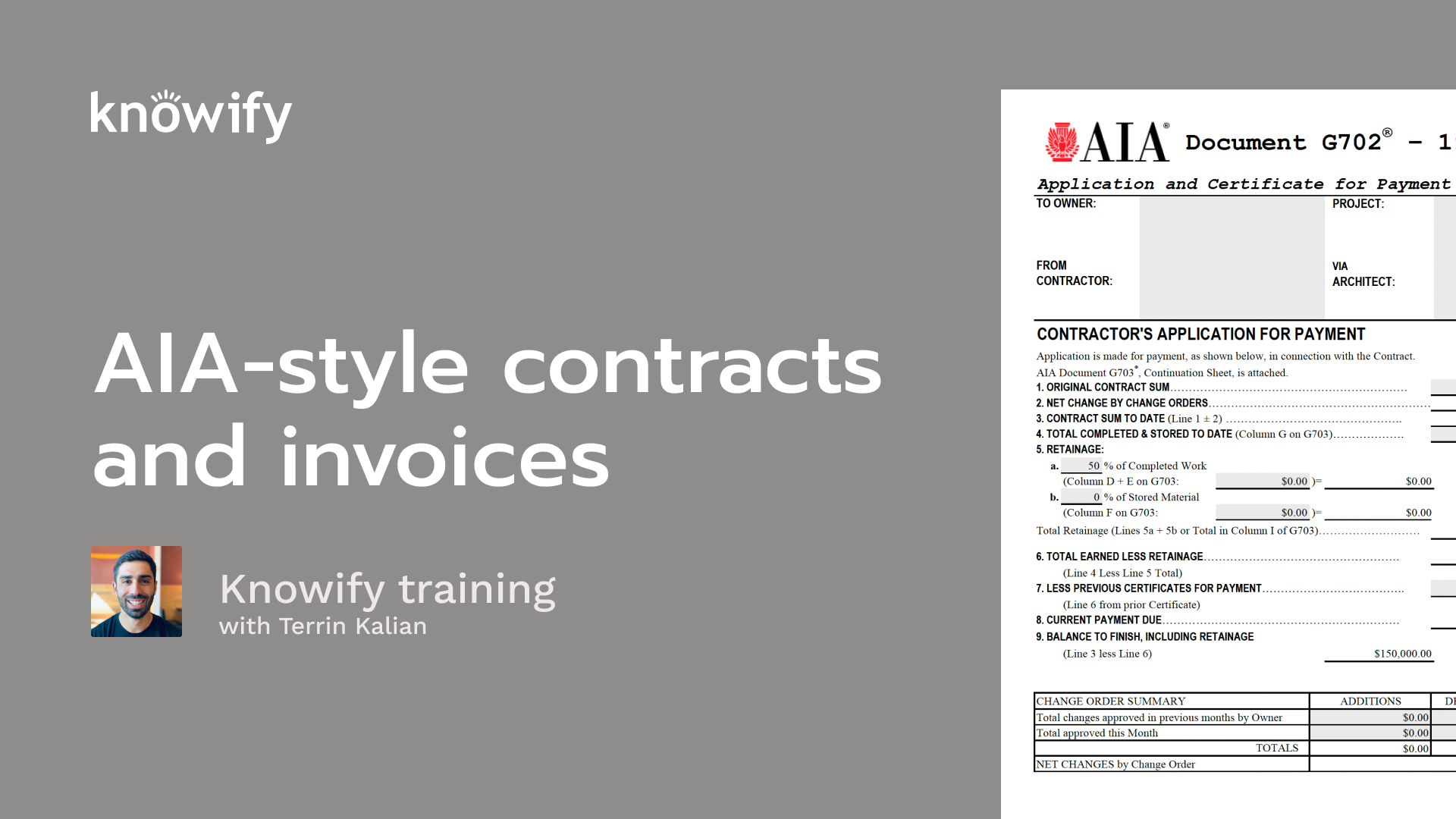
Certified payroll is where a good job can quietly turn unprofitable. One error compounds across wages, fringe, overtime, and the report itself. And these mistakes are common enough that the government treats them as a known problem. On December 16, 2025, the DOL’s Wage and Hour Division released an updated fillable WH-347 and an annotated WH-347, explicitly to “reduce common reporting errors.” When the DOL builds a form to prevent your mistakes, the mistakes are worth taking seriously. Below are the specific errors trade contractors make on prevailing wage work, what each one costs, and how to avoid them.
Certified payroll is a weekly report proving you paid prevailing wages plus fringe on federally funded or assisted construction. It applies to contracts over $2,000 for the construction, alteration, or repair of public buildings and works, under the Davis-Bacon and Related Acts, according to the DOL.
The report is due weekly. DOL regulations at 29 CFR 5.5 require weekly submission, and each payroll must carry a signed Statement of Compliance. The requirement traces back to the Copeland Act of 1934. One clarification that trips up contractors: the DOL confirms that Form WH-347 is optional, but weekly submission of the certified payroll information is mandatory.
Worker classification is the number one place certified payroll goes wrong. The rule is simple, but easy to break: classifications are tied to the work actually performed, drawn from the wage determination in your contract, not to job titles or convenience.
There are two common failure modes. The first is labeling employees as independent contractors. The second is assigning a lower-paid classification than the work justifies.
Here is the hidden trap. If a worker performs work in more than one classification and you did not keep an accurate breakdown of hours per classification, the DOL requires paying all those hours at the highest applicable prevailing wage rate. Sloppy time tracking automatically costs you the highest rate.
The stakes are real. A Pennsylvania contractor paid $85,284 in back wages after classifying employees as general laborers while they performed skilled carpentry and pipefitting on federal projects, according to the DOL.
To avoid it, pull classifications straight from the wage determination named in your contract, and capture hours by classification in the field. Knowify’s mobile time tracking captures field hours by classification in real time, so the breakdown exists before the report does.
Prevailing wage rates vary by location, trade, and project. Use an expired or wrong determination and you underpay workers, which sets up back-wage restitution and possible debarment.
This mistake is easier to make than ever right now. The DOL published a final rule, “Updating the Davis-Bacon and Related Acts Regulations,” effective October 23, 2023. It was a substantial overhaul of the rules, so assumptions built on older guidance may now be stale.
To avoid it, pull the exact wage determination, including its revision number, named in the contract. Re-check it when contracts renew, since a rate that was current last quarter may not be current today.
Fringe is the most misunderstood mechanic on the WH-347. The DOL allows you to meet fringe obligations two ways: contributions to a bona fide benefit plan, or cash paid in lieu of fringe. The two are recorded differently on the report.
The common error is mixing cash-in-lieu into the base rate column, or running a plan that doesn’t fully cover the required fringe and leaves a deficiency. Both distort the numbers a reviewer relies on.
To avoid it, separate the base rate from fringe, document plan contributions versus cash, and list any deficiency clearly. It also helps to price fringe in from the start. Knowify budgets for the true cost of labor using fully loaded labor burden or prevailing wage rates, so fringe is part of the plan, not a surprise.
Apprentices are a quiet source of violations because the reduced-rate rules are strict. The DOL allows reduced apprentice rates only if the worker is registered in an approved program, proper ratios are met, and box 4 of the WH-347 lists the program. Otherwise, the worker gets the full classification rate.
The cost of getting this wrong is documented. A subcontractor on a U.S. Army Corps of Engineers project paid $44,816 in back wages to 12 employees after misclassifying apprentices who were doing specialized pipefitting, according to the DOL.
Certified payroll is a weekly discipline, not a monthly one. Reports are due weekly, and late or missing reports can trigger withheld contract funds. That is your own money held back over a paperwork gap.
One detail contractors miss: you must still file a “No Work” report for weeks when no work happened on the project. Silence is not the same as compliance. To avoid both problems, make the report a fixed weekly routine rather than an end-of-month scramble.
Not every deduction is allowed on prevailing wage jobs. Except for the deductions listed in 29 CFR 3.5, all payroll deductions require prior DOL approval. The Copeland “Anti-Kickback” Act bars inducing workers to give back any of their pay.
Penalties here often dwarf the deduction itself, so even a small error can cost far more than the amount withheld. When in doubt, confirm a deduction is permitted before it hits a paycheck.
Federal law requires detailed records: hours, classifications, wages, and fringe, preserved and available. Incomplete records almost guarantee a failed audit, because you cannot prove what you cannot document.
The root cause is rarely bad intent. It is manual spreadsheets and paper field notes feeding disconnected systems that leave gaps. Hours get transcribed twice, and the second copy drifts from the first.
To avoid it, keep a time-stamped, searchable record that runs from the field to the office without re-entry. Knowify syncs field work back to the office in real time and carries the deepest two-way QuickBooks integration in construction, so there’s no double data entry and no gap for errors to hide in.
The Statement of Compliance is signed under penalty of perjury. The DOL notes that a false statement falls under 18 U.S.C. § 1001, which carries a fine and possible imprisonment of up to 5 years. Guessing to fill in a blank puts your signature on a document you may not be able to stand behind.
Liability spreads, too. General and prime contractors are responsible for their subcontractors’ compliance, so a sub’s mistake can become the GC’s back-wage bill.
Consider a Massachusetts federally funded housing project. One subcontractor underpaid wages and fringe, and another falsified certified payroll records to conceal it. The DOL recovered $77,206 in back wages, and both subs were debarred from federal projects for 3 years.
Look across these mistakes and one pattern shows up every time: manual data, disconnected field time, and payroll treated as separate from job costs. Fix the pattern and you prevent the errors before they reach the report.
A workflow that holds up is repeatable. Capture hours by classification in the field. Job-cost those hours against a prevailing-wage budget. Generate the WH-347 from that same data. Then sync it to QuickBooks so the office and the books agree.
This is where a connected system earns its keep. Knowify helps trade contractors generate WH-347 certified payroll reports and job-costs both prevailing and non-prevailing wage work in one place. Because the report is built from the hours and costs you already tracked, there’s no separate spreadsheet to reconcile. For a reference while you set your process, the DOL’s updated fillable and annotated WH-347 forms are built to reduce exactly these errors.
What are the most common certified payroll mistakes?
The most common mistakes are misclassifying workers, using outdated wage determinations, mishandling fringe benefits, and incomplete recordkeeping. Most of them trace back to manual data entry and field hours that never connect cleanly to the report.
Who is responsible if a subcontractor makes certified payroll mistakes?
The general or prime contractor is responsible for subcontractor compliance on Davis-Bacon work. That means a sub’s underpayment or bad report can become the GC’s back-wage liability.
How long do I have to correct a certified payroll mistake?
There is no fixed grace period, so correct and resubmit as soon as you discover the error, along with any wage restitution owed. The safest approach is to fix it on discovery rather than waiting for an audit.
How long must I keep certified payroll records?
Keep certified payroll and supporting records for at least three years. Detailed, preserved records are your first line of defense in a DOL audit.
Do overtime rules apply on Davis-Bacon projects?
Yes. Under CWHSSA, on prime contracts over $100,000, laborers and mechanics must be paid 1.5 times their regular rate for all hours over 40 in a workweek.
Certified payroll mistakes are common, but they are preventable. More paperwork won’t fix them. An accurate, connected system will: one that captures hours by classification, job-costs against a prevailing-wage budget, and builds the WH-347 from data you already trust. Get that foundation right and compliance stops being a weekly scramble. Every DOL rule cited here comes straight from the Wage and Hour Division, so pair this checklist with your contract’s wage determination and you have a plan you can run on every job. Request a demo to see how Knowify keeps prevailing wage jobs on track, job after job.
Disclaimer: The information in this article is provided for general educational purposes only and does not constitute legal, financial, tax, or compliance advice. Certified payroll and prevailing wage requirements vary by jurisdiction, contract, and project, and the rules change frequently. Knowify makes no representations or warranties as to the accuracy, completeness, or applicability of any information provided here, and disclaims all liability for any actions taken or not taken based on this content. Before making any decisions or acting on anything described in this article, consult a qualified attorney, accountant, or compliance professional familiar with your specific situation. Your use of this information is at your own risk.